



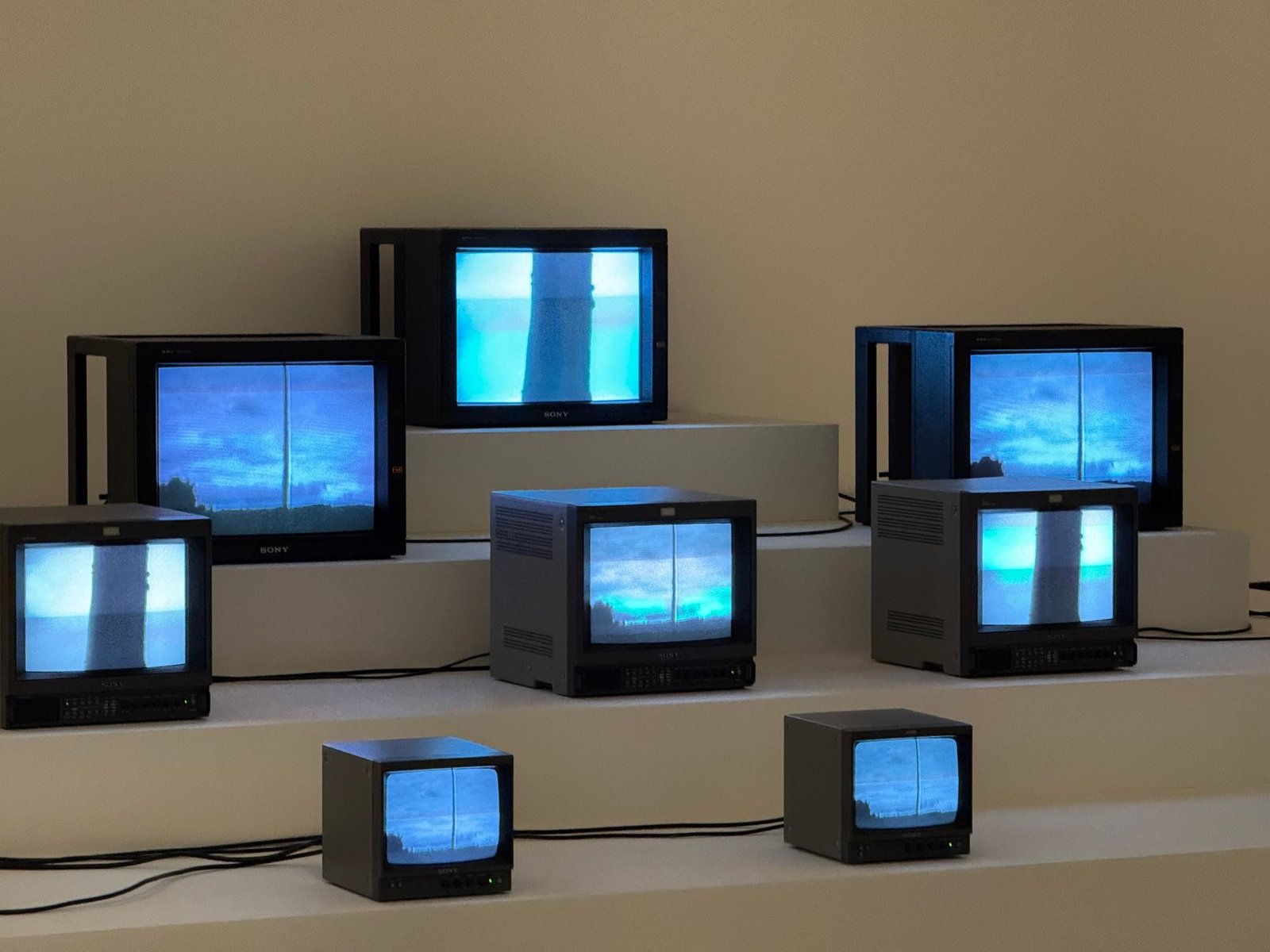
Imagine a world where your television isn’t just a screen, but a canvas waiting to be part of your decor masterpiece. Today, we explore art TVs that redefine home entertainment by seamlessly blending technology and aesthetics.

Key Takeaways:
- Art TVs integrate art and design with advanced display technology to enhance home living spaces.
- These TVs can switch between being high-quality televisions and exquisite art pieces when not in use.
- Technological advances in displays, like OLED, enrich color and texture reproduction, resembling a genuine artwork.
- The fusion of AI with display technology determines the next evolution of visual media in smart homes.
The Intersection of Art and Technology
The concept of **art TVs** marries **display technology** with **artistic design** to create a dual-purpose device: a television when you watch and a piece of art when you don’t. This blend has redefined what home entertainment can aspire to be. Picture your TV transitioning from a thrilling movie to showcasing your favorite Van Gogh or Monet, adding elegance to any space.
The Magic Behind Art TVs
The secret behind these stunning **art televisions** lies in cutting-edge display technologies like **OLED (Organic Light Emitting Diode)** and **LED (Light Emitting Diode)** technologies. Unlike traditional LED TVs, an OLED, for example, can display perfect blacks and intense colors due to its capability of turning off individual pixels. This feature allows art TVs to mimic the depth and texture of real paintings remarkably well.
Another player in this space is the **QLED (Quantum Dot LED)**, which enhances color and brightness using quantum dots. Imagine tiny semiconductors that efficiently emit such precise light that it feels like natural sunlight bringing life to the colors on screen. By incorporating these technologies, manufacturers push the boundaries of fidelity and realism in digital displays.
Why Choose an Art TV?
Art TVs bring several practical benefits beyond their aesthetic appeal. These devices are particularly popular among those who appreciate art or have a modern minimalist aesthetic at home. Some practical considerations include:
Aesthetic Flexibility
Unlike conventional televisions, art TVs blend into home decor effortlessly. They provide customizable frames and endless artwork selections, making it feel like you own a personal digital gallery. For instance, Samsung’s **The Frame** TV is renowned for its ability to display art that fits its customizable physical frames, allowing it to harmonize with its surroundings seamlessly.
Advanced Features
Most art TVs lack nothing in advanced capabilities. You’re still getting a fully functional smart TV capable of streaming, gaming, and integrating with smart home devices. They also come with motion sensors that dim or display essential information when you are nearby—turning them into interactive art pieces that live and breathe with you.
Energy Efficiency
Thanks to their ability to vary display outputs, OLED and QLED screens are significantly more energy-efficient. When the TV is in art mode, it uses less power than when displaying motion pictures, even as it produces rich and vibrant artworks.
Real World Analogy: Art Gallery at Home
Consider hosting an art exhibition in your living room, where the walls, rather than being overwhelmed by screens, transform into a curated art gallery. Each piece of art can change according to your mood or event, projecting either tranquility or vibrancy using just a remote or voice-activated command. This creates a dynamic living space, evolving with your lifestyle.
The Future of Art TVs and AI
As we look toward the future, the intersection of AI and digital display technology promises to broaden further the scope of how art and entertainment intertwine. AI could elevate these displays, making them smarter by analyzing viewer habits and suggesting artwork or even learning to adapt the atmosphere of a room based on the time of day and activity.
The potential for art TVs goes beyond enhancing current living spaces; it symbolizes a merging trend where digital, art, and personal expression become seamlessly integrated. The question isn’t just what the next TV will look like, but how much more liveliness and character it will bring into our homes. The fusion of AI with art opens a vista of possibilities, transforming everyday viewing experiences into dynamic, interactive tableau vivants.
