


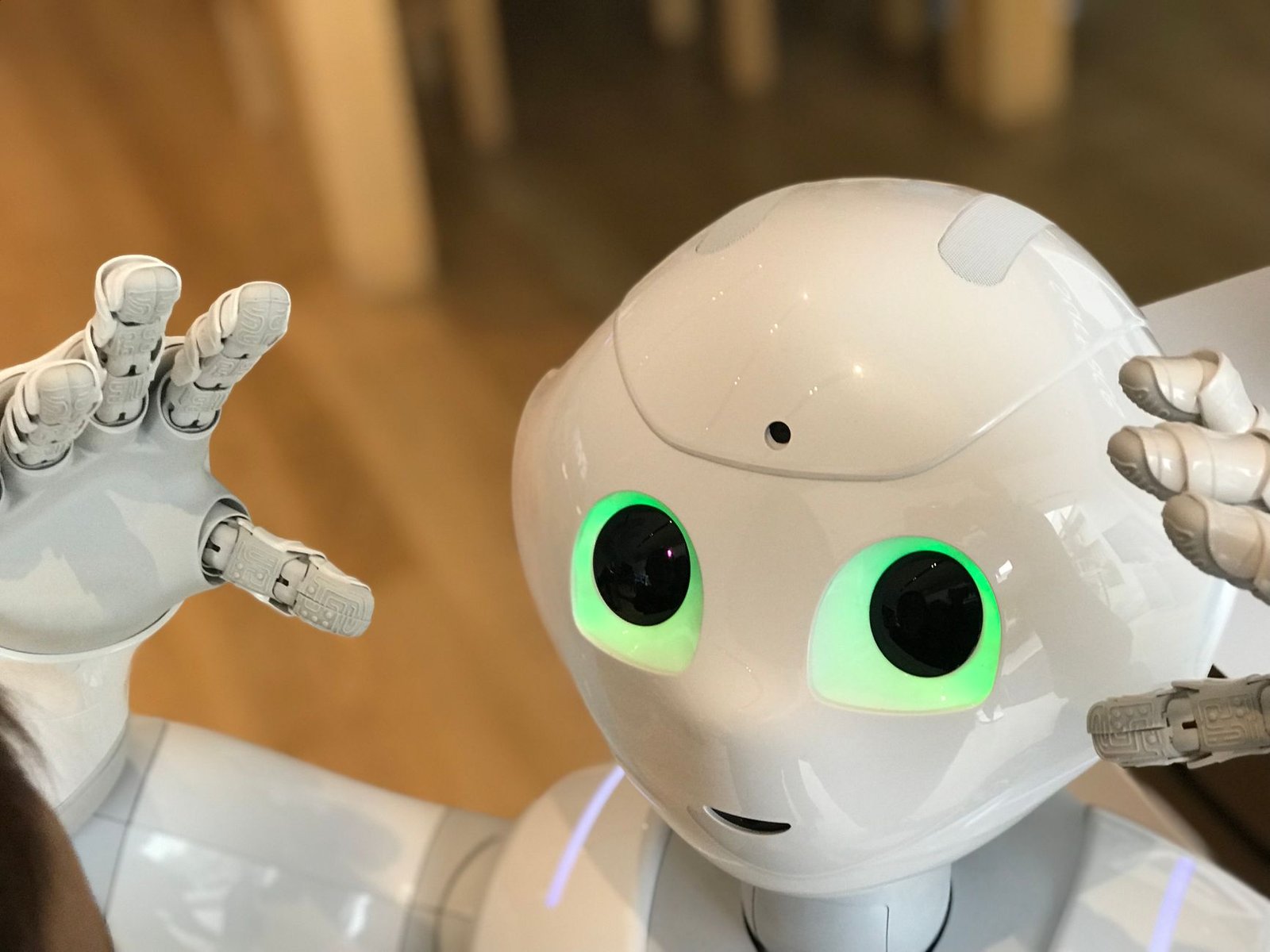
Imagine a world where robots learn to perform tasks by merely observing others, much like children learning by watching adults. This captivating realm of **imitation learning** is breaking new ground in AI, especially with an advanced form known as **third-person imitation learning**.
- Third-person imitation learning allows machines to learn from observing actions performed by others.
- This approach can potentially accelerate the training process for AI systems, reducing the need for direct input.
- It introduces flexibility, enabling AI to learn from diverse perspectives and scenarios.
- Key challenges include translating human actions into machine-understandable commands.
What is Third-Person Imitation Learning?
At its core, third-person imitation learning focuses on enabling machines to learn tasks by watching someone else perform them. This contrasts with traditional methods where the AI must learn through first-person interaction or trial-and-error processes. By observing from a **third-person perspective**, the AI gains a panoramic view of the task, accommodating various angles and contexts in its learning process.
How it Differs from Traditional Methods
Unlike **reinforcement learning**, where AI systems learn through rewards and penalties, or **supervised learning**, which requires labeled examples, third-person imitation learning leverages observation. This means the AI doesn’t need explicit instructions; instead, it deduces the correct actions by watching examples, much like how you might learn to cook by watching your favorite chef on a cooking show.
The Mechanics of Learning Through Observation
When implementing third-person imitation learning, the process generally involves three key steps: **perception**, **interpretation**, and **execution**.
Perception
The AI uses sensors or cameras to perceive the environment, capturing visual data that includes actions, objects, and outcomes. Advanced technologies like **computer vision** help the AI identify and classify these components, much like how our brains process images.
Interpretation
Once the data is collected, the AI must interpret the actions it’s observing. This is where the challenge lies: translating complex human movements into a format the AI can replicate. This often involves **machine learning algorithms** trained to recognize patterns and infer intent.
Execution
Finally, the AI system attempts to execute the learned task. This phase may involve trial and refinement, where initial attempts are adjusted based on additional observations or errors, akin to learning to ride a bike through perseverance.
A Real-World Analogy
Consider a novice golfer attempting to learn a swing by watching videos of professional players. By paying close attention to how the professionals stand, grip the club, and follow through each swing, the novice golfer can replicate these actions even without direct instruction. In a similar vein, third-person imitation learning equips machines with the capacity to glean skills autonomously by analyzing expert performance.
Challenges and Opportunities
One of the most significant challenges in third-person imitation learning is the **translation** of human actions into something a machine can process and replicate. While humans intuitively understand nuances like intent or contextual cues, AI systems must be explicitly programmed or trained to recognize these subtleties.
However, the potential advantages are immense. This approach could drastically reduce the resources needed to train AI, paving the way for machines that **adapt and evolve** more rapidly and efficiently. By learning from a wider array of sources, AI systems could gain greater **generalization abilities**, improving their functionality across diverse settings.
The Future of AI with Imitation Learning
Looking forward, the implications of third-person imitation learning in AI are vast. As the technology matures, we could witness a shift towards more autonomous and adaptable AI systems capable of modifying their behaviors based on new observations. This paves the path towards AI that not only mimics human abilities more closely but also enhances them by processing information from a multitude of sources, potentially exceeding human capacity in certain domains.
In a future where machines learn robustly from their surroundings, the possibilities for collaboration and innovation between humans and AI are boundless. Third-person imitation learning marks a pivotal step towards a world where intelligent machines seamlessly complement our lives.
