


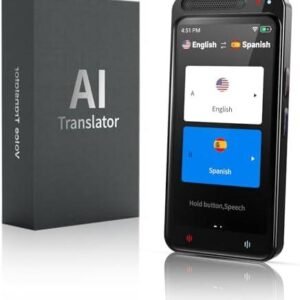

Imagine speaking to a device and having it understand you as clearly and effortlessly as a human would. This isn’t the distant future—it’s unfolding right now with groundbreaking advancements in voice intelligence.

- The latest voice models can now reason, translate, and transcribe speech in real time.
- These advancements offer more natural and intelligent voice experiences.
- Understanding complex speech patterns is now more accessible to developers.
- Integration into everyday applications is becoming increasingly seamless.
Revolutionizing Speech Interaction
The introduction of new realtime voice models in the OpenAI API marks a significant leap forward in how machines process human speech. These models don’t merely interpret words—they delve deeper into understanding context and intent. Such capability enables machines to hold more meaningful interactions, as the technology behind voice recognition becomes more sophisticated and nuanced.
From Understanding to Reasoning
Modern voice models have evolved beyond simply recognizing speech to actually reasoning with it. This means they can comprehend abstract concepts and contextual cues that previously tripped up older systems. Picture a virtual assistant that can flawlessly juggle between tasks because it truly understands the nuances of conversational language.
Translation and Transcription: Bridging the Gap
One of the standout features of these new models is their enhanced ability to translate and transcribe speech. Imagine a tool in a surgeon’s hand, translating multiple languages in real time during an international conference call, ensuring no valuable input is lost due to language barriers. These capabilities don’t just translate words—they convert entire contexts into understandable formats for various audiences, enhancing communication efficiency.
Demystifying Complex Terms
For many, terms like AI reasoning and contextual analysis might seem esoteric. Simply put, AI reasoning involves the computer’s ability to solve problems creatively by mimicking how a human might think about the issues. Contextual analysis, on the other hand, refers to the AI’s capability to discern context from the surrounding speech elements, making it possible to derive meaning even from ambiguous statements.
A Real-World Analogy
Consider a customer service representative in a bustling call center. Each call is a new challenge, requiring quick thinking, context understanding, and language translation. The latest AI models are akin to employing a supercharged agent who never tires, understands every dialect, and can instantly switch between languages—all while keeping the conversation flowing smoothly. This analogy underscores how these technologies can transform industries by providing exceptional service without human constraints.
A Glimpse into the Future
The implications of these new voice models extend far beyond improved customer interactions. As we witness technology breaking down traditional barriers of language and comprehension, we edge closer to a future where machines are truly multilingual and conversationally adept. This evolution doesn’t just alter how we interact with technology—it reshapes it. Envision a world where seamless communication between humans and machines becomes part of daily life, blurring the lines between AI and human intelligence.
As AI continues to evolve, so too will its role in society. The potential for intelligent voice models expands into education, healthcare, and global business, promising a future where technology is as intuitive and helpful as any human counterpart. With each advancement, AI steps closer to realizing a new era of communication—one that is inclusive, comprehensive, and remarkably intelligent.
