



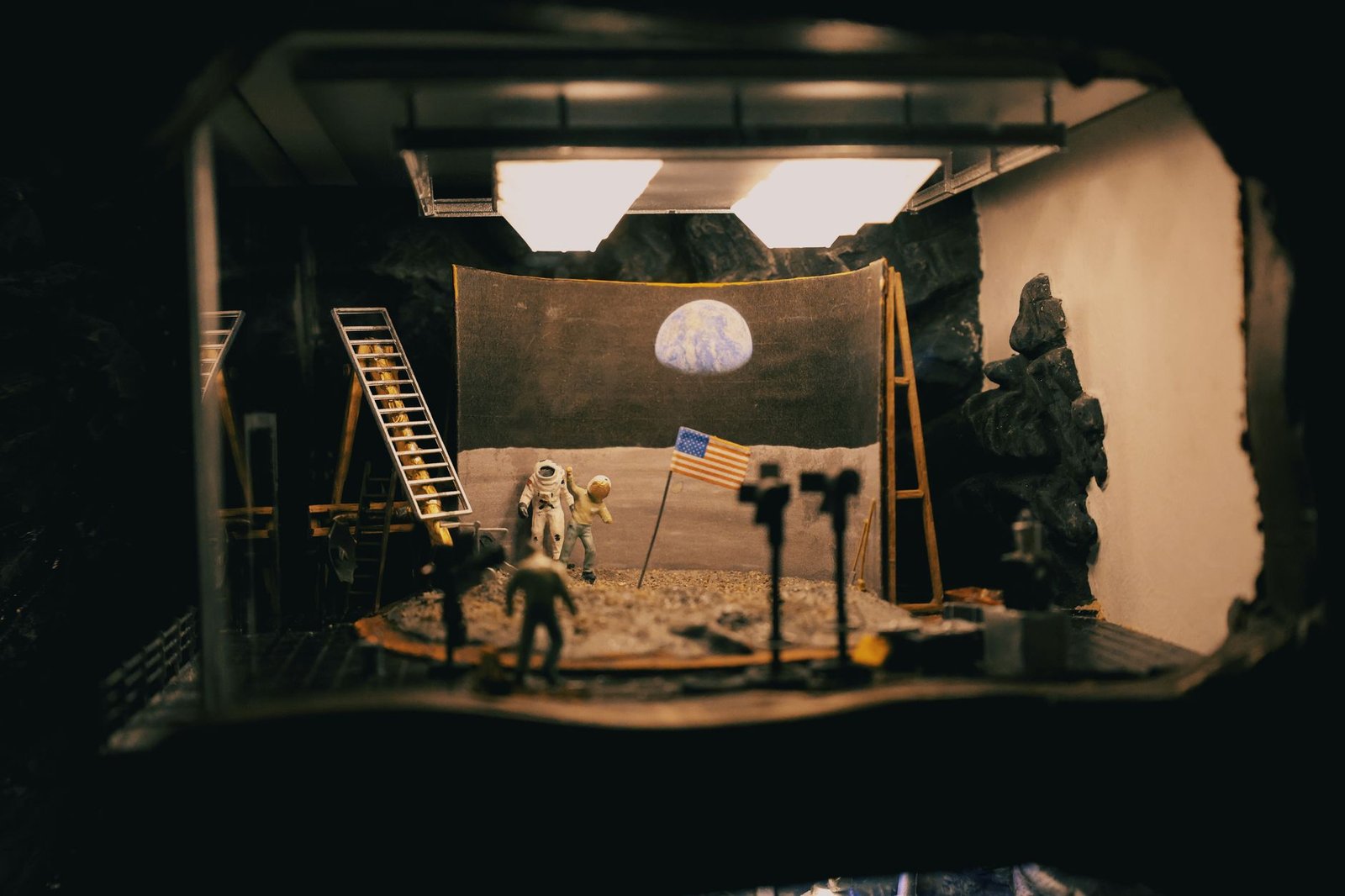
NASA recently altered its ambitious lunar exploration objectives, reshaping its cosmic roadmap. Assembling a Moon base has taken center stage, pushing previous plans for a lunar Gateway to the periphery. Yet, not all elements of this majestic space project have been fully explained, leaving many curious about the evolving roles of various spacecraft components.
Key Takeaways:
- NASA is prioritizing the creation of a Moon base over the previously planned lunar orbit space station.
- The Power and Propulsion Element is being redirected towards a new mission.
- Questions linger about the future of the Habitation and Logistics Outpost (HALO).
- This shift impacts ongoing projects and contracts, notably with Northrop Grumman.
- The direction signals broader, long-term investments in sustainable lunar exploration.
A Shift from Orbital to Surface Exploration
NASA’s latest strategy signifies a significant pivot from building a space station orbiting the Moon to actually establishing a base on the Moon’s surface. This transition is not just a change in scenery but a profound shift in priorities, technology, and resources. By anchoring its mission focus on the lunar surface, NASA hopes to foster sustainable exploration and utilize resources directly from the Moon itself.
The Re-purpose of the Power and Propulsion Element
Among the apparatus already in development, the **Power and Propulsion Element** stands out. Originally intended for the lunar Gateway, this component’s mission has now been transformed. It is set to lead as a **nuclear-electric propulsion** demonstrator in deep space, showcasing innovative capabilities in energy-efficient space travel. Nuclear-electric propulsion utilizes electricity to accelerate propellants, offering a more sustainable method of long-duration space travel.
Uncertainty Surrounding the HALO Module
The **Habitation and Logistics Outpost (HALO)** remains in a state of uncertainty. Designed as a spacious, pressurized habitat where astronauts would reside during their Gateway missions, HALO’s role is unclear with the recent strategic shift. Despite significant investments by NASA—over $1.1 billion awarded to Northrop Grumman—the future of HALO is still under review.
Consider the situation like architecting a complex construction project. Imagine initially planning to build a skyscraper with an ornate observation deck, but mid-construction, deciding instead to focus efforts on urban park development elsewhere. In such circumstances, elements of the original design need reassessment, just as HALO requires re-evaluation in light of NASA’s evolving goals.
Impact on Northrop Grumman and Industry Implications
For Northrop Grumman, this pause presents both a challenge and an opportunity. While work on HALO halts, it also opens the doors to potential new missions aligned with NASA’s Moon base ambitions. The firm, a trusted NASA contractor, must now recalibrate its space strategy, underscoring the dynamic nature of space exploration contracts where flexibility is as essential as innovation.
This transition reflects a broader trend in the industry towards **sustainable space exploration**. Moving beyond traditional exploration paradigms, it emphasizes adaptability and resilience in the face of changing cosmic conditions and objectives.
The Future of Lunar Exploration and AI’s Role
As NASA forges ahead with its Moon base vision, the integration of advanced technologies, including **artificial intelligence (AI)**, will be pivotal. AI could offer solutions for autonomous habitat management, efficient resource extraction, and robotic assistance on the lunar surface.
In envisioning this future, AI stands to optimize operations, enhance safety measures, and push the boundaries of what is possible in space projects. While the shape of lunar missions may change, the role of AI in propelling humanity forward is becoming more profound.
NASA’s fresh course reflects a significant evolution in space exploration philosophy, one where AI plays a crucial part in crafting a sustainable legacy on the Moon and beyond. We are witnessing the beginning of a new era, one where bold steps on the lunar surface pave the path to infinite possibilities beyond our Earthly confines.
