



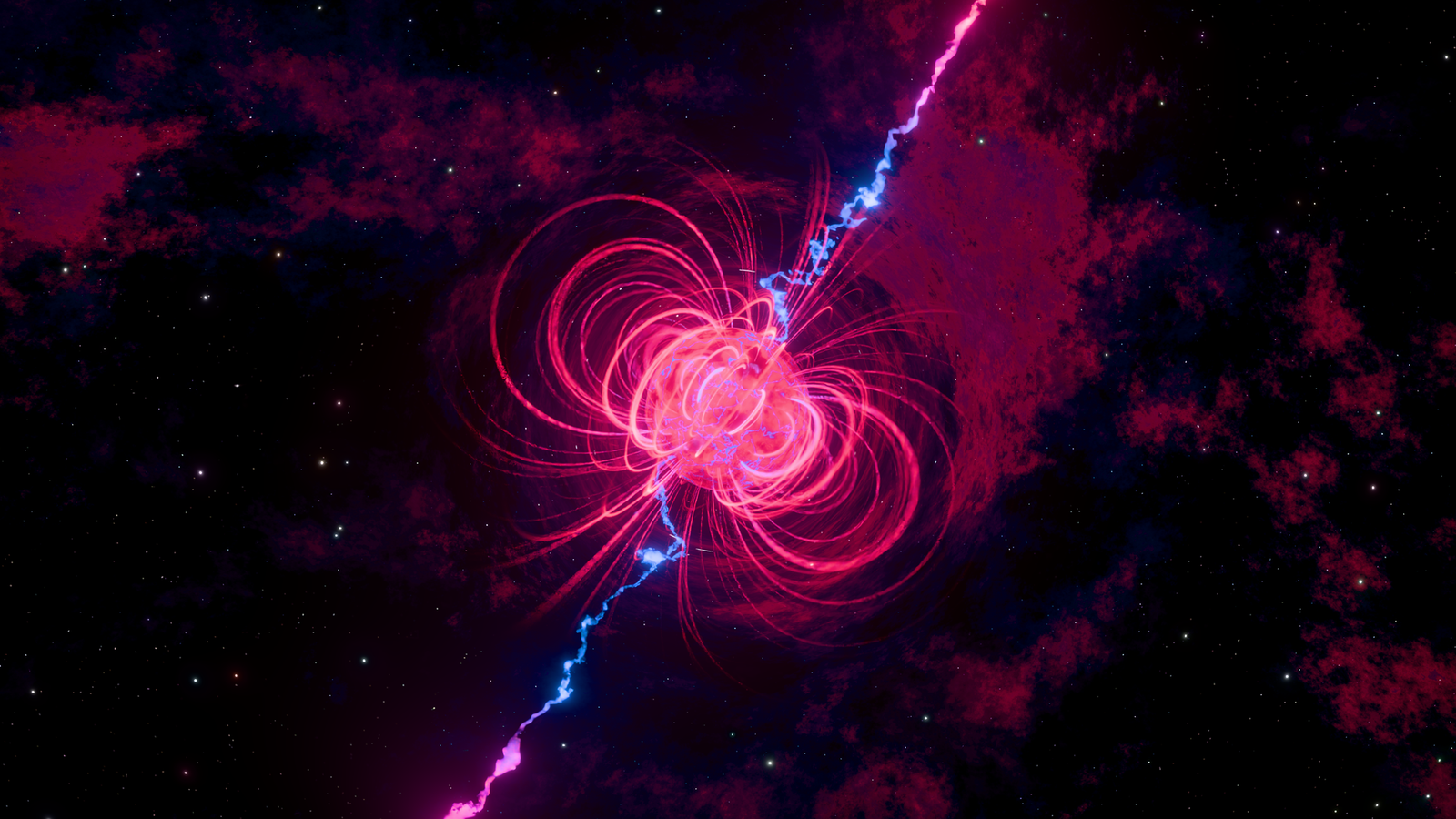
Imagine a planet so close to its star that their magnetic fields intertwine like dancers in a cosmic waltz. This extraordinary phenomenon isn’t just the stuff of science fiction but a reality astronomers are beginning to comprehend, offering a new perspective on the dynamic interactions within our universe.
Key Takeaways
- Some exoplanets orbit their stars in just a few days, much faster than planets in our solar system.
- Close proximity can result in strange phenomena such as overlapping magnetic fields.
- Magnetic field interactions can cause periodic brightening of the star.
- Researchers predicted these interactions before observing them in reality.
- The discovery reshapes our understanding of planetary systems beyond our own.
Redefining “Close to the Sun”: A New Perspective
For centuries, Mercury has defined our notion of proximity to a star, with its quick 88-day journey around the Sun. However, the discovery of exoplanets—planets orbiting stars beyond our own—has vastly expanded this perspective. Many of these distant worlds orbit their stars in just days, a contrast to our solar system’s rhythm.
The Dance of Magnetic Fields
In these tight-knit orbits, *overlapping magnetic fields* present an unexpected twist. When a planet orbits extremely close to its star, the gravitational and electromagnetic forces in play can cause fascinating interactions. Researchers have identified a star-planet duo whose relationship includes periodic brightening, a clue hinting at this magnetic dance.
From Theory to Observation
This discovery was not entirely out of the blue. Scientists had long theorized that when a planet’s magnetic field is sufficiently strong, it could interact with a star’s field, creating bursts of energy like solar flares. Verification of this theory came through the observation of young stars that flare up in response to their planets—a cosmic game of tag illuminated by science.
Understanding the Magnetic Connection
To visualize this, think about how iron filings align around a bar magnet. Similarly, a planet’s magnetic field might influence the iron-rich activity on its star. This magnetic coupling is a complex interplay of forces where the planet acts somewhat like an anchor, stabilizing, and occasionally disrupting, the magnetic activities of its star.
Why This Matters
*Periodic brightening* and other magnetic interactions provide new insights into the dynamics of planetary systems. Understanding these relationships enhances our knowledge of potential habitability and climate conditions on exoplanets, which are pivotal in the search for extraterrestrial life.
Broader Implications for AI and Astronomy
As AI technologies advance, astronomers can leverage machine learning to analyze massive datasets from telescopes more efficiently. AI-powered algorithms can identify subtle changes in light patterns, magnetic interactions, and other phenomena far beyond the capabilities of human analysis alone.
**Looking ahead,** as AI continues to evolve, these tools will allow scientists to unearth more insights from the cosmos, pushing the boundaries of what we know about the universe. This seamless integration of technology and astronomy could lead to revolutionary discoveries, reshaping our understanding of the very fabric of space and time.
