




Imagine a world where continents rise and fall with the grace and unpredictability of ocean tides. This isn’t a fantasy; rather, it’s a glimpse into the hauntingly ancient past of our own planet. Earth’s continents, those stable landmasses upon which civilizations have thrived, had a rather fiery and cosmic inception.
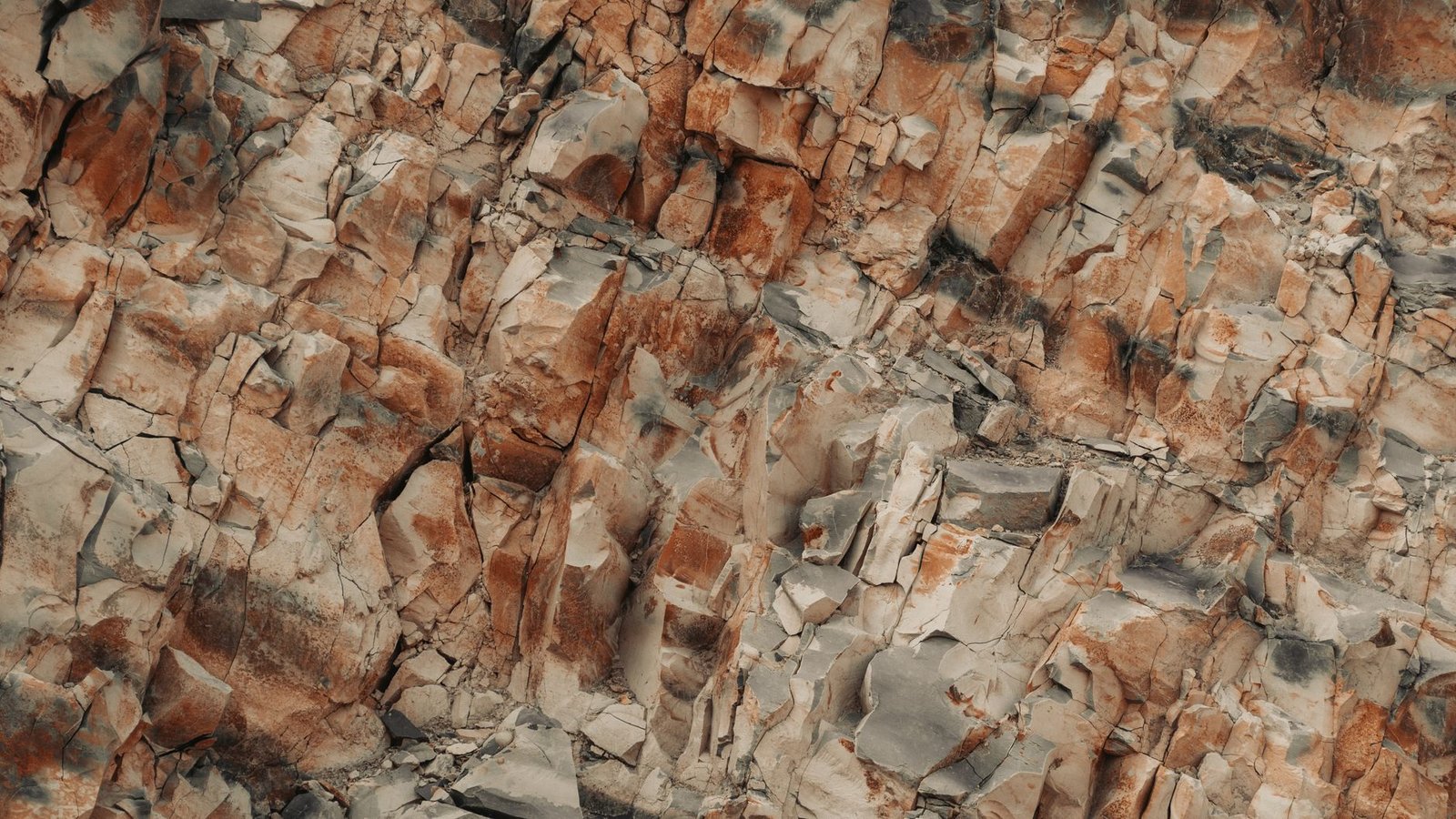
- The continents started forming around four billion years ago.
- The process was likely triggered by asteroid impacts that melted Earth’s crust.
- Geological evidence is sparse due to the ancient age of these events.
- Early Earth’s surface was dynamic, changing rapidly under cosmic influences.
- Understanding ancient geological processes informs us about Earth’s future.
Unraveling Earth’s Mysterious Crust
Earth’s buoyant, silica-rich continents are unique compared to other known celestial bodies, yet their origin remains one of geology’s big mysteries. The story kicks off approximately four billion years ago when the oldest continental rocks started to form. Though Earth itself is about 4.5 billion years old, what sparked the creation of these landmasses at that specific time is still a matter of debate among scientists like Tim Johnson at Curtin University in Australia.
The Cosmic Connection
Recent studies by Johnson and his team propose that asteroid impacts played a crucial role in shaping early Earth. These cosmic collisions were far from benign. The intense bombardment kept the primordial crust in a perpetually heated and thin state, crucial conditions for the emergence of our continents. In essence, these extraterrestrial encounters might have created the land we call home today, suggesting that Earth’s serene landscapes were born from celestial chaos.
The Challenge of Ancient Evidence
Studying Earth’s earliest days is like trying to solve a puzzle with most pieces missing. Over billions of years, geological evidence fades or transforms. The oldest known rocks that resemble continental structures date back to just over 4 billion years ago, and are remnants from the late Hadean eon—an era stretching over Earth’s first 500 million years. Beyond these, we rely mostly on minuscule zircon crystals to peek into a time long past, creating a patchwork of incomplete stories and bold hypotheses.
The Debate Continues
As scientists like Johnson sift through scant clues from Earth’s infancy, the scientific community remains divided on the exact processes that formed the continents. Terms like ‘plates and plumes’—referencing tectonic plate activity and mantle plumes, which are columns of rising solid mantle—circulate debates, yet the scarcity of concrete data invites diverse interpretations and lively scientific discourse.
Continental Drift: Earth’s Transformative Movement
To make sense of how continents might have formed, consider the cake analogy. Imagine a thick, difficult-to-melt dough. Left in a lukewarm oven, it remains static and gooey. However, turn up the heat, and it bubbles and shifts, creating new shapes and textures. Similarly, cosmic impacts heated early Earth’s crust, enabling the formation and movement of land that would eventually stabilize into continents.
Looking Ahead: Implications for AI
Understanding Earth’s ancient past isn’t just about satisfying human curiosity; it has profound implications for predictive models in artificial intelligence (AI). By comprehending how major, unpredictable events can shape sweeping planetary processes, AI can better simulate and predict outcomes in complex systems, from climate models to ecosystems management. As AI continues to evolve, our expanding awareness of Earth’s past may equip machine learning algorithms with the insight to foresee environmental trends with greater accuracy.
Today, as we delve deeper into the mysteries of our planet’s history, we arm ourselves with knowledge that transcends time. The origins of Earth’s continents, forged in cosmic fire, challenge us to reflect on our place within the universe and inspire the next era of technological and scientific breakthroughs.
