


Imagine a world where tractors predict their own failures, fields receive customized care, and harvests are optimized with surgical precision. With the integration of artificial intelligence (AI) into agriculture, companies like John Deere are making this vision a reality, revolutionizing farming to enhance productivity and sustainability.
Key Takeaways:
- AI is transforming agriculture by boosting efficiency and sustainability.
- John Deere employs machine learning to anticipate equipment needs and optimize farm management.
- The technology supports precision farming, allowing for customized field treatments.
- Real-world applications demonstrate AI’s potential to enrich agricultural strategies.
- Future advancements in AI promise even deeper impacts on farming techniques.
The Evolution of Farming with AI
In an industry where tradition often reigns supreme, John Deere is leading the charge toward a digital transformation in agriculture. **Justin Rose**, a key innovator at John Deere, highlights the company’s mission to not only improve efficiency but to also ensure sustainability across farming practices. By layering AI-driven models onto traditional farming methods, John Deere enables farmers to operate with **insightful data** that guides decision-making processes. But how exactly is this achieved?
Machine Learning and Predictive Analytics
At the core of John Deere’s strategy is machine learning (ML), a subset of AI that enables computers to learn from data and make predictions. For instance, John Deere uses ML to perform **predictive maintenance** on its tractors and equipment. This involves analyzing data from IoT sensors (devices connected via the Internet) to predict when a machine might fail, thus reducing downtime and repair costs. Imagine your car telling you it needs a check-up before it stalls; the same principle applies here, keeping farm operations running smoothly.
Precision Farming: Customizing Care
Precision farming, an approach that enhances crop yield and reduces waste, is dramatically enhanced by AI. Just as a tailored treatment plan benefits a patient, fields benefit from customized care based on AI insights. By using **remote sensing technology** and ML algorithms, John Deere can assess soil health, monitor plant growth, and manage water usage with near-pinpoint accuracy. This means that every inch of farmland can be treated according to its specific needs, optimizing both resource use and crop yield.
A Real-World Example: Improving Crop Yields
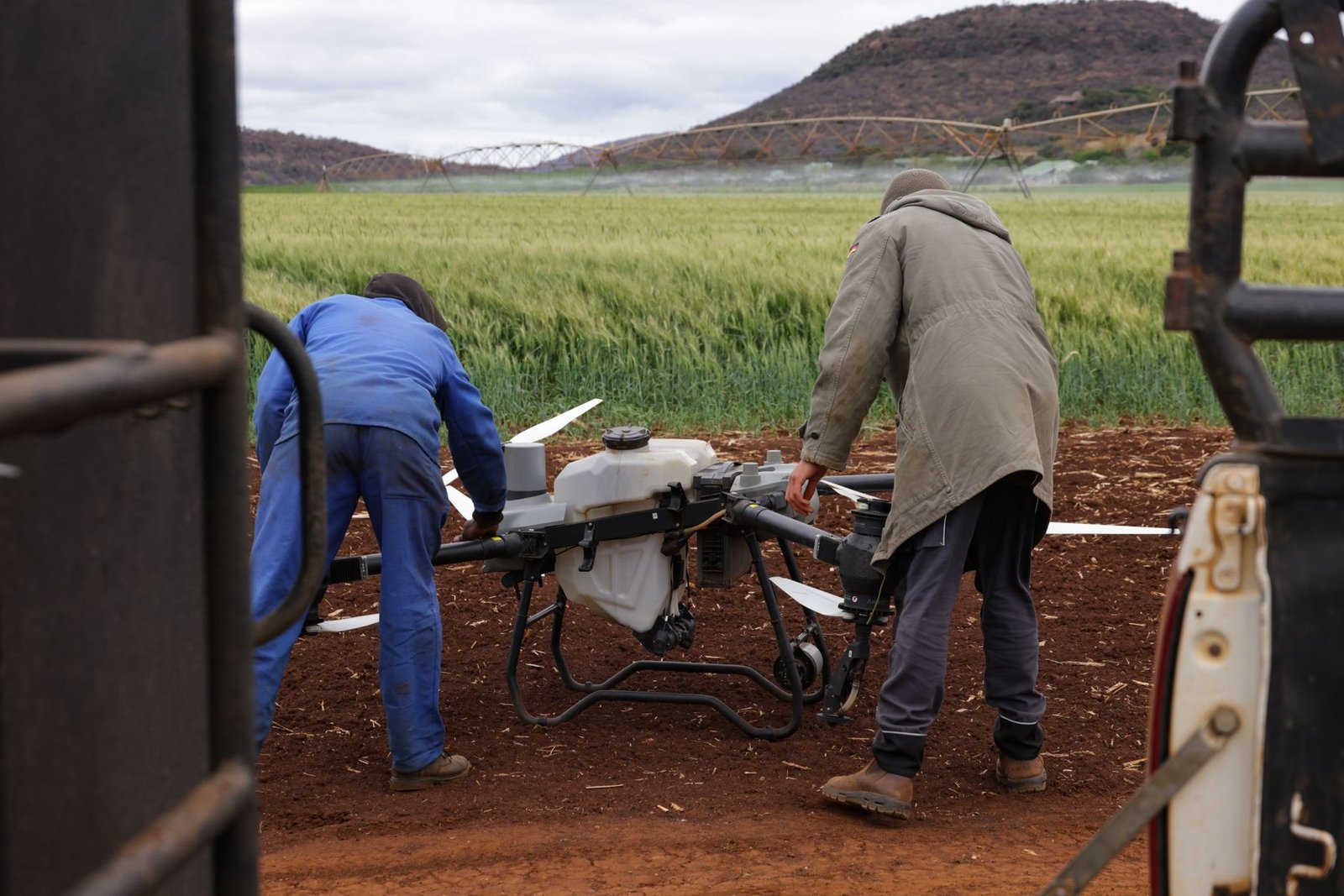
Consider the scenario where a farmer uses drones equipped with AI-driven imaging systems to survey an expansive cornfield. By analyzing the images, AI can identify stressed plants and guide the farmer in applying targeted fertilizers or pesticides only where necessary. This not only spares other plants but also saves costs, limits environmental impact, and increases overall production. Through such real-world applications, AI equips farmers with the intelligence needed to refine their methods and improve output.
The Broader Impact of AI in Agriculture
Beyond immediate benefits, AI’s role in agriculture has profound implications for global food security and environmental health. By empowering farmers to make better-informed decisions, we can meet rising food demands more sustainably while minimizing ecological footprints. The synthesis of **data-driven farming** with traditional know-how is not just a technological advance; it is a crucial step toward future-proofing the agriculture sector.
As Justin Rose and John Deere illustrate, the compelling story of AI in agriculture is one of unlocking potential and enabling creativity. **Artificial intelligence** is not merely a tool—it is a partner in farming innovation, poised to address some of the world’s biggest challenges in food production.
Looking ahead, the potential for AI to evolve into more adaptive, intuitive systems promises to redefine the agricultural landscape even further. As technology continues to advance, we can envisage a world where AI not only aids but anticipates the needs of the farming community, crafting a future where agriculture is smarter, more efficient, and more integrated than ever before.
