



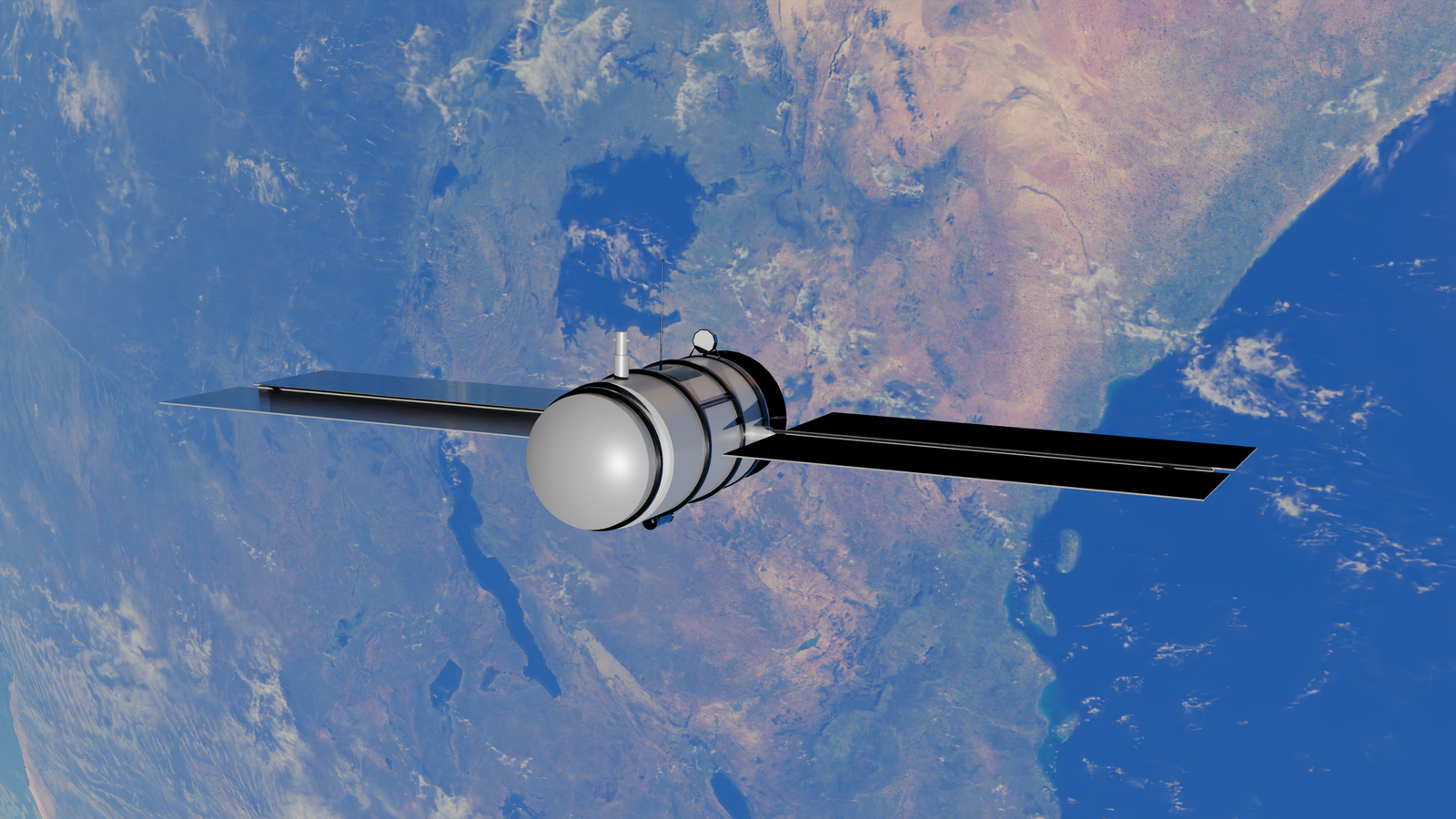
Imagine a high-stakes game of hide and seek, but in outer space. As sci-fi as that sounds, it’s happening right now, hundreds of miles above us. This isn’t just a thrilling concept; it’s a glimpse into the strategic future of satellite technology.
Key Takeaways
- Military exercises are demonstrating complex maneuvers between satellites in space.
- True Anomaly has developed a satellite named Jackal, which played a strategic game with another spacecraft, Puma.
- These exercises are crucial for understanding how satellites might operate in potential future space conflicts.
- The implications of this technology could extend beyond military applications to commercial endeavors.
The Cat-and-Mouse Dynamics in Orbit
In a groundbreaking military exercise, True Anomaly showcased the potential future of satellite interactions that resembled a chase scene from a space-themed blockbuster. For the first time in an unclassified setting, this exercise revealed how satellites could evade or pursue each other, mimicking tactical maneuvers from Earthly engagements.
This event was spearheaded by True Anomaly’s spacecraft Jackal, also known as Panther, which engaged in this cosmic ballet with another satellite named Puma. Both spacecraft are based on Rocket Lab’s Pioneer satellite platform, a foundational framework that enables advanced satellite capabilities.
What Made This Mission Unique?
True Anomaly’s CEO and co-founder, Evan Rogers, articulated the significance of this operation by stating it had been in the making for four years. This wasn’t just about flexing technological prowess but aimed at a tangible proof-of-concept reflecting potential defense strategies.
Such exercises are an essential step toward understanding the future of space warfare possibilities. The key is not just in outmaneuvering potential adversaries but in leveraging these pathways for peaceful and commercial purposes as well.
Understanding Satellite Pursuit and Evasion
The concept of satellites chasing each other might sound simple, but it requires an intricate level of precision and planning. When we say a satellite is playing “cat and mouse,” we are referring to its ability to track, follow, or evade another in orbit.
In a real-world sense, think of this maneuver as akin to a game of tag, albeit played on an orbital field. This game is facilitated by handing off precise location data, analyzing orbital dynamics, and employing predictive algorithms — an area where artificial intelligence can significantly enhance operational efficiency.
The Role of AI in Space Strategies
AI is a critical component in this technological marvel. Through AI, satellites can autonomously decide the best pathways to navigate, using machine learning to adapt and learn effective patterns over time. Detailed algorithms help these satellites process massive data quantities to make swift and accurate decisions in real-time.
Much like how autonomous vehicles are expected to navigate through urban environments smoothly, these satellites must adeptly handle the vast, three-dimensional space of their orbital paths, avoiding collisions and optimizing routes — crucial tasks for both military and commercial satellites in the future.
The Broader Implications
Beyond military applications, the evolution of this technology carries expansive implications for the commercial space sector. Imagine a company being able to seamlessly reposition its communication satellites in response to changing consumer demand or to evade space debris rapidly — a scenario entirely feasible with these advancements.
This aligns with the growing trend of democratizing space, allowing not just governments but private enterprises to harness space more effectively. Such capabilities can drive significant advancements in global communication, Earth observation, and beyond.
Looking Ahead: The Future of AI-Driven Space Exploration
The recent demonstrations by True Anomaly highlight the incredible potential and necessity of AI in developing sophisticated space maneuverability. The aerospace field is rapidly evolving, and as AI technologies further mature, they promise a future where satellites might orchestrate an intricate ballet of movements above our planet — not just for defense, but for commerce and the continued exploration of our universe.
As the boundaries of what we can achieve in space continue to expand, one thing remains certain: AI will be at the heart of these pioneering efforts, driving us to explore new frontiers.
