


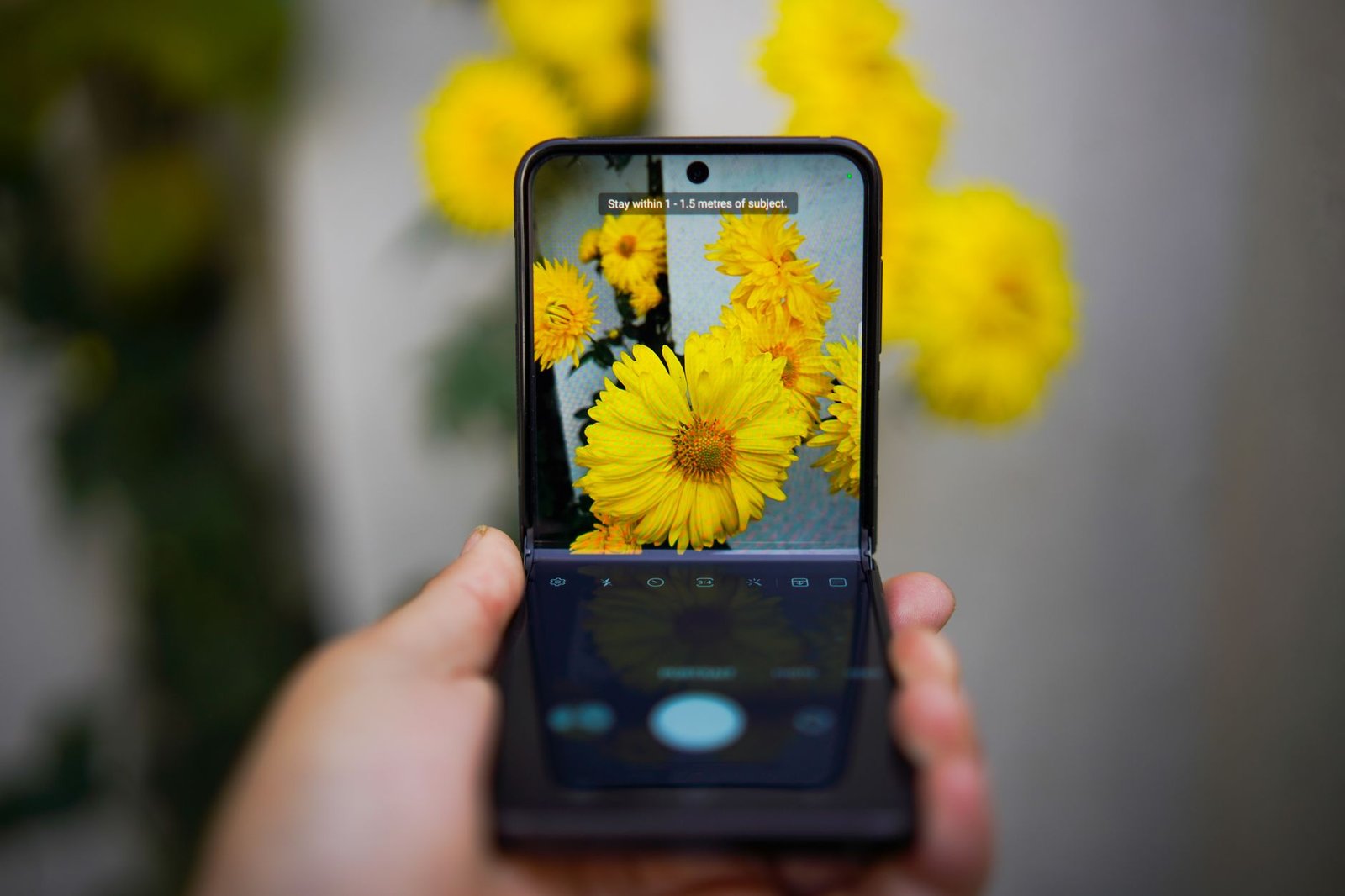
Think your smartphone is smart enough? Think again. The world of mobile technology is undergoing a revolution, with **folding phones** leading the charge into the future.
- Folding phones offer a portable yet expansive screen experience.
- These devices transform dynamically based on user needs.
- Advanced hinges and materials make durability a key feature.
- AI is integral to optimizing foldable technology.
The Revolution of Flexibility: Folding Phones Explained
While most of us have grown accustomed to the rigid glass of traditional cell phones, folding phones introduce an entirely new dimension to our tech experience. These innovative devices allow you to fold or unfold your phone, providing flexibility in screen size and usage. Imagine a paperback book that can morph into a magazine as you flip through it—folding phones bring that kind of adaptability to your digital life.
How Do Folding Phones Work?
At the heart of these devices is an **advanced hinge mechanism** combined with **flexible OLED (Organic Light Emitting Diode) displays**. OLED screens are not only vivid and energy-efficient, but they can also bend and fold without losing their picture quality. This technology allows for a seamless transition between compact and expanded modes, so you get a tablet-like experience from a device that fits in your pocket.
Sustainability and Durability: A New Era
Early models of folding phones were met with skepticism around their durability. However, companies like **Samsung, Google, and Motorola** have pushed the envelope with **materials science breakthroughs**. For example, ultra-thin glass and reinforced polymers make modern folding phones robust enough to withstand everyday wear and tear.
Think of these phones as today’s Swiss Army knives. Where earlier models had one primary function, advanced engineering now allows folding phones to be versatile yet rugged, designed with the user in mind.
Smart Features Amplified by AI
The success of folding phones is not only due to their physical flexibility but also their smart features powered by **Artificial Intelligence (AI)**. Here’s how AI enhances your folding phone experience:
- Adaptive Displays: AI algorithms optimize screen content based on how you’re using the device, adapting automatically whether it’s folded or fully open.
- Enhanced Multitasking: Intelligent software allows multiple apps to run fluidly, recognizing your patterns and suggesting applications that enhance productivity.
- Contextual Awareness: Your phone becomes more intuitive, predicting needs like when to activate hands-free mode or conserve battery during imminent travel.
Real-World Example: The Office on the Go
Imagine you’re a business professional always on the move. A folding phone enables you to switch from responding to emails in phone mode to drafting spreadsheets in tablet mode on a single device. While standard phones limit you to linear, confined views, a folding phone expands your workspace, providing flexibility and ease without the burden of carrying multiple devices.
The Future of Folding and AI
As we stand at the cusp of this technological shift, folding phones will likely reshape how we think about personal devices over the next few years. **AI** is poised to evolve these devices further, making them indispensable tools that adapt even more dynamically to individual routines and preferences.
Looking ahead, we can anticipate even more seamless integration between digital assistants and physical devices, pushing the boundaries of what mobile technology can do. The interplay between folding technology and AI will lead to phones that are ever more intelligent and attuned to our needs, paving the way for a more connected and efficient future.
