


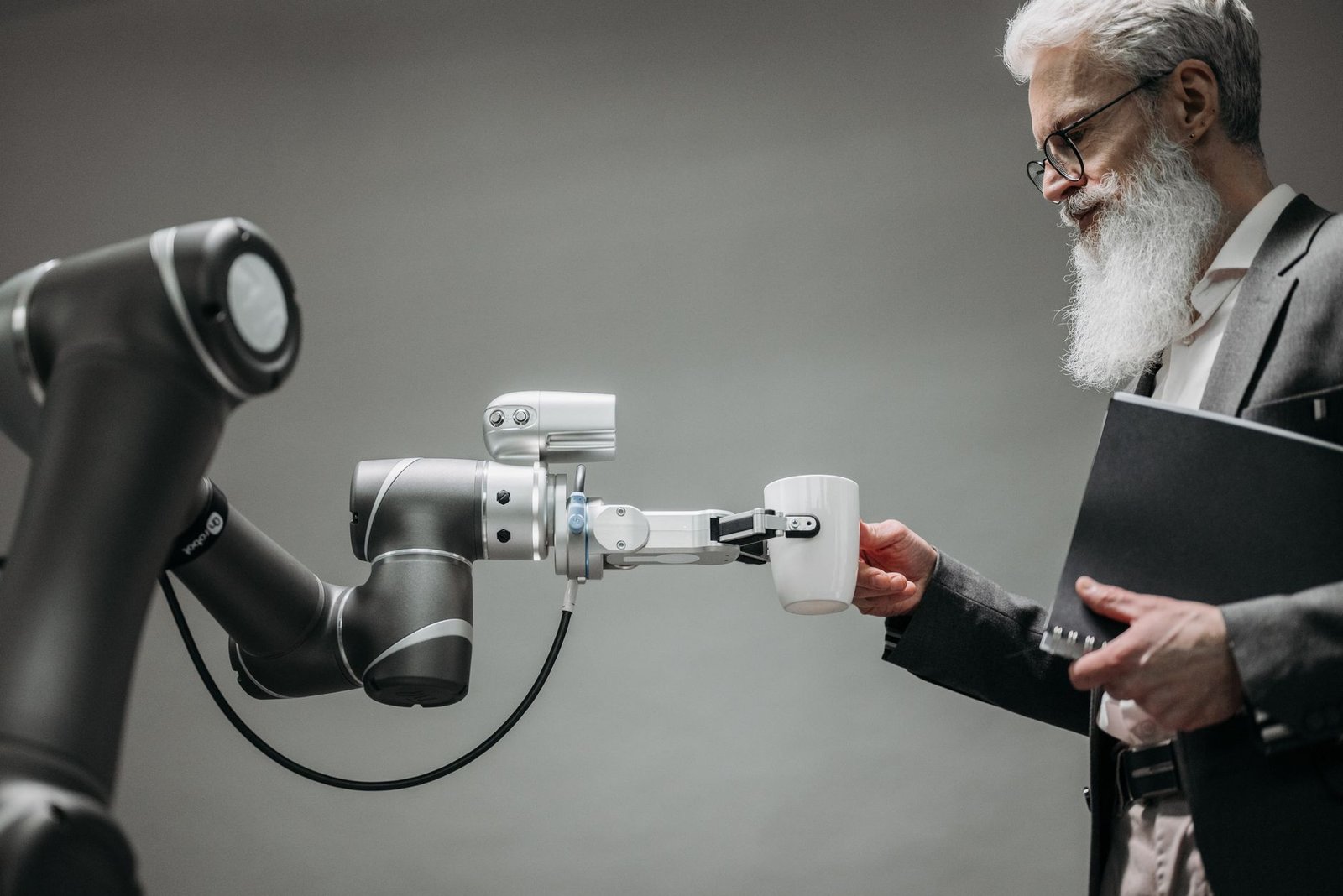
Imagine a world where AI assists your every task, making your workday more efficient and rewarding. Welcome to the era of GPT-5—a cutting-edge AI tool rapidly transforming how businesses operate across various industries.

Key Takeaways
- GPT-5 is being adopted rapidly across diverse sectors for enhanced productivity.
- Businesses leverage GPT-5 for both routine and complex tasks.
- The tool is reshaping departmental roles by automating mundane processes.
- Understanding AI’s capabilities can drive more strategic implementation in work environments.
- The future of GPT-5 suggests growing interdependence between AI and human workforces.
Understanding GPT-5: The AI at Work
GPT-5, a powerful language model developed by OpenAI, goes beyond its predecessors by offering unprecedented capabilities in natural language processing. At its core, GPT-5 allows computers to understand and generate human-like text, making it a versatile asset in workplace environments. Businesses are increasingly adopting this technology not just for automating tasks but also for generating insights and refining workflows.
Adoption Trends across Industries
From marketing to finance, companies across sectors have begun integrating GPT-5 into their operations. The technology’s ability to handle large volumes of text and generate creative content makes it particularly attractive for content creation and customer service tasks. In competitive arenas like financial analysis, GPT-5 also contributes by quickly summarizing reports or scanning data sets for trends that might otherwise take human employees hours to process.
Transforming Tasks with GPT-5
One significant aspect of GPT-5’s implementation is its application in routine tasks, freeing employees to focus on strategic initiatives. For example, in human resources, GPT-5 can handle initial stages of resume screening and training documentation. Marketing teams use the AI to draft emails, social media posts, and even brainstorm campaign ideas—all within a fraction of the time it would take manually.
Departmental Revolution
Departments across organizations are witnessing near-revolutionary shifts thanks to GPT-5. Legal departments benefit from its ability to parse through large volumes of text and extract relevant information for case preparations. In customer service, GPT-5 can address customer inquiries through enhanced chatbots, offering solutions or escalating issues to human agents seamlessly. This efficient handling of queries increases customer satisfaction and allows human employees to tackle more nuanced customer needs.
A Tangible Example: The Media Industry
Consider the media industry, where content is king. A major publishing house recently integrated GPT-5 to bolster its editorial process. The AI tool outputs draft articles based on key themes provided by human editors, who can then refine these drafts to match the publication’s voice. This collaboration between AI and humans not only speeds up content creation but also allows writers to focus on deeper investigative work and creative pursuits.
Bridging the Technical Divide
The essence of GPT-5’s appeal is its simplicity in application despite its complex underlying technology. By transforming natural language into meaningful output, it removes the technical barrier often associated with AI tools. Businesses can mold GPT-5 to fit specific operational needs without necessitating deep technical expertise from their workforce. Think of it as having a team member who learns on the job and adapts to your organizational culture.
The Future of GPT-5 and Artificial Intelligence
As we look towards the future, the integration of AI models like GPT-5 in the workplace signifies a growing synergy between human creativity and machine efficiency. This interdependence is likely to breed innovative business models and new roles that combine technical expertise with creative problem-solving abilities. Industries must embrace this evolution, ensuring that AI tools enhance, rather than replace, the human elements of business. With proper implementation, GPT-5 promises not just to reshape current workflows but to revolutionize the very fabric of how we view productivity and innovation.
