



Can cutting-edge technology really reshape our world without widespread acceptance from the scientific community? Microsoft’s quantum computing team is betting yes, and they’re advancing in bold new directions even amidst skepticism regarding their claims. What could this mean for the future of AI and computing?
Key Takeaways
- Microsoft’s quantum team claims breakthroughs that challenge existing scientific beliefs.
- The technology, if proven, could dramatically transform computing capabilities.
- Skepticism exists not just due to the claims, but due to lack of conventional evidence.
- The implications could realign how AI processes information.
- Future advancements may redefine our relationship with technology.
Breaking New Ground in Quantum Realms
In a bold move that’s capturing attention, but also raising eyebrows, Microsoft’s quantum research team has announced a discovery that could revolutionize computing: the creation of a **new state of matter**. This advancement, according to the team led by **Zulfi Alam**, could be the key to unlocking unprecedented computational power, paving the way for a new era of quantum computing. However, what’s stirring the scientific pot is not the ambition, but the apparent sidestep of traditional validation methods.
Understanding Quantum Computing
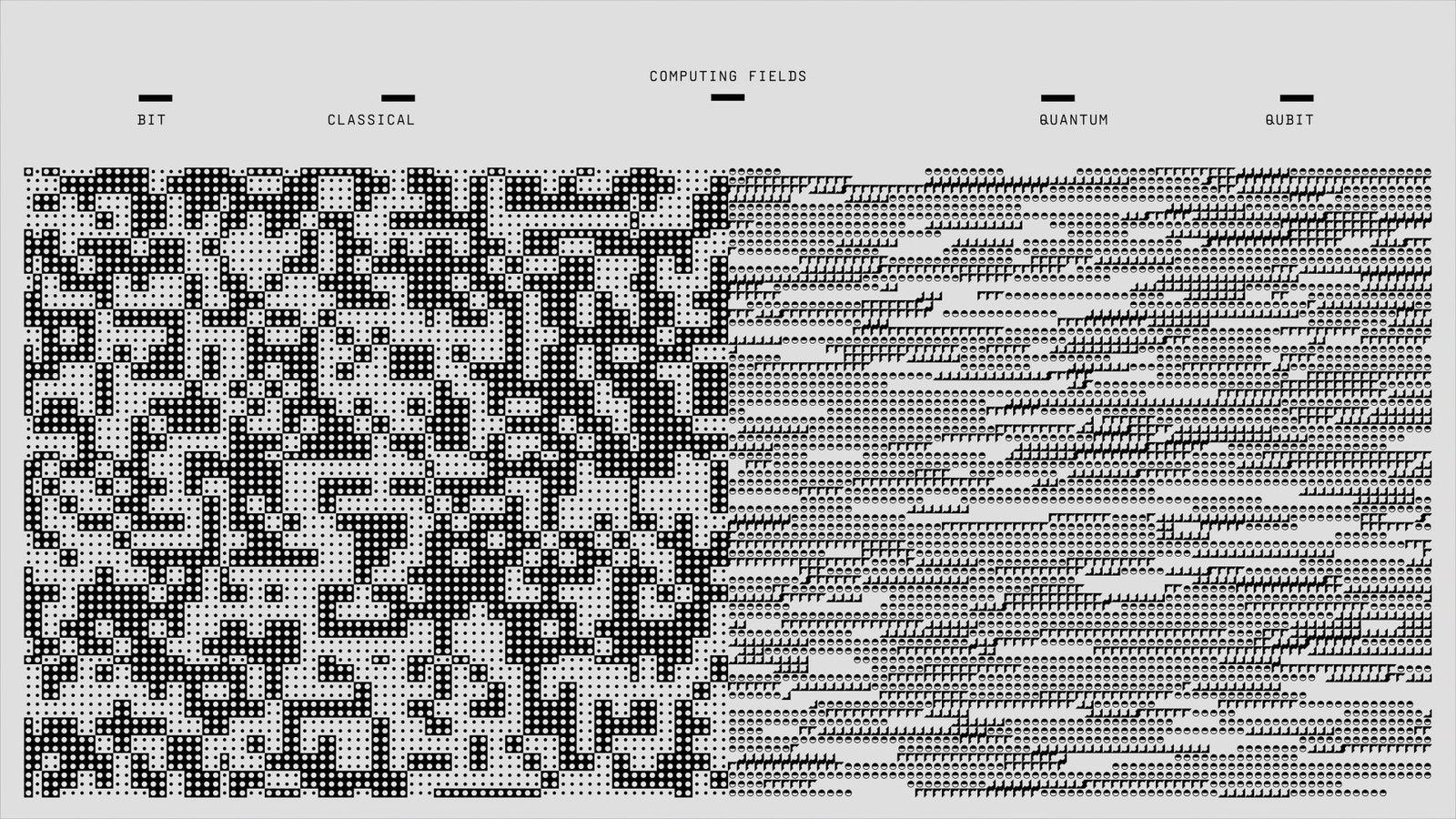
At its core, **quantum computing** uses the principles of quantum mechanics, the science of the very small—particles at the atomic and subatomic level—to process information exponentially faster than traditional computers. Concepts like **superposition** (where particles exist in multiple states at once) and **entanglement** (a connection between particles that allows them to influence each other instantly) are harnessed to create qubits, the quantum version of classical bits. While classical bits are binary, qubits can exist in complex, nuanced states, potentially allowing quantum computers to perform massive calculations simultaneously.
The Gap Between Claim and Consensus
Despite the transformative potential, not everyone in the scientific community is convinced. **Peer validation** is fundamental in science; yet, Alam’s team has been remarkably nonchalant about securing it. Their approach has been one more of quiet progress than public validation. In traditional science, claims need experimental proofs subjected to rigorous peer review to gain acceptance and credibility. Microsoft’s stance raises a crucial question: Can science advance if it doesn’t play by its usual rules?
This situation may remind you of the early days of electricity. When **Thomas Edison** unveiled his electric light, skeptics scoffed at the practicality and impact of the new technology. Eventually, through relentless innovation and gradual societal acclimatization, electric light became indispensable.
The Promises and Pitfalls
If Microsoft’s claims hold water, the implications for the tech world are enormous. Imagine AI systems that could simulate entire ecosystems in real time, predict climate patterns with stunning accuracy, or even revolutionize fields like cryptographic security. The crux of the matter is whether these claims can transform from idea to implementation without the customary scientific endorsement.
The skepticism, however, stems from the **consistency of results**. At the heart of advancing technology is the need for reliable outcomes. With quantum computers, even the smallest disturbance can lead to significant errors, a challenge known as **quantum decoherence**. Ensuring stability and scalability continues to be a formidable obstacle.
Looking Ahead: The AI Frontier
The potential here extends far beyond just quantum computers. If realized, it could completely redefine AI capabilities by delivering computational power that surpasses current standards by orders of magnitude. Such advancements would allow AI to solve complex problems that are currently infeasible, given the processing limitations of classical systems.
We stand at a fascinating juncture. If Microsoft succeeds, the ripple effect could reshape our technological frontier, enabling AI to address some of today’s most significant challenges — from healthcare to climate change. As we forge ahead, it prompts an exhilarating thought: What if the next world-changing idea is one that doesn’t need the world’s immediate believability?
