


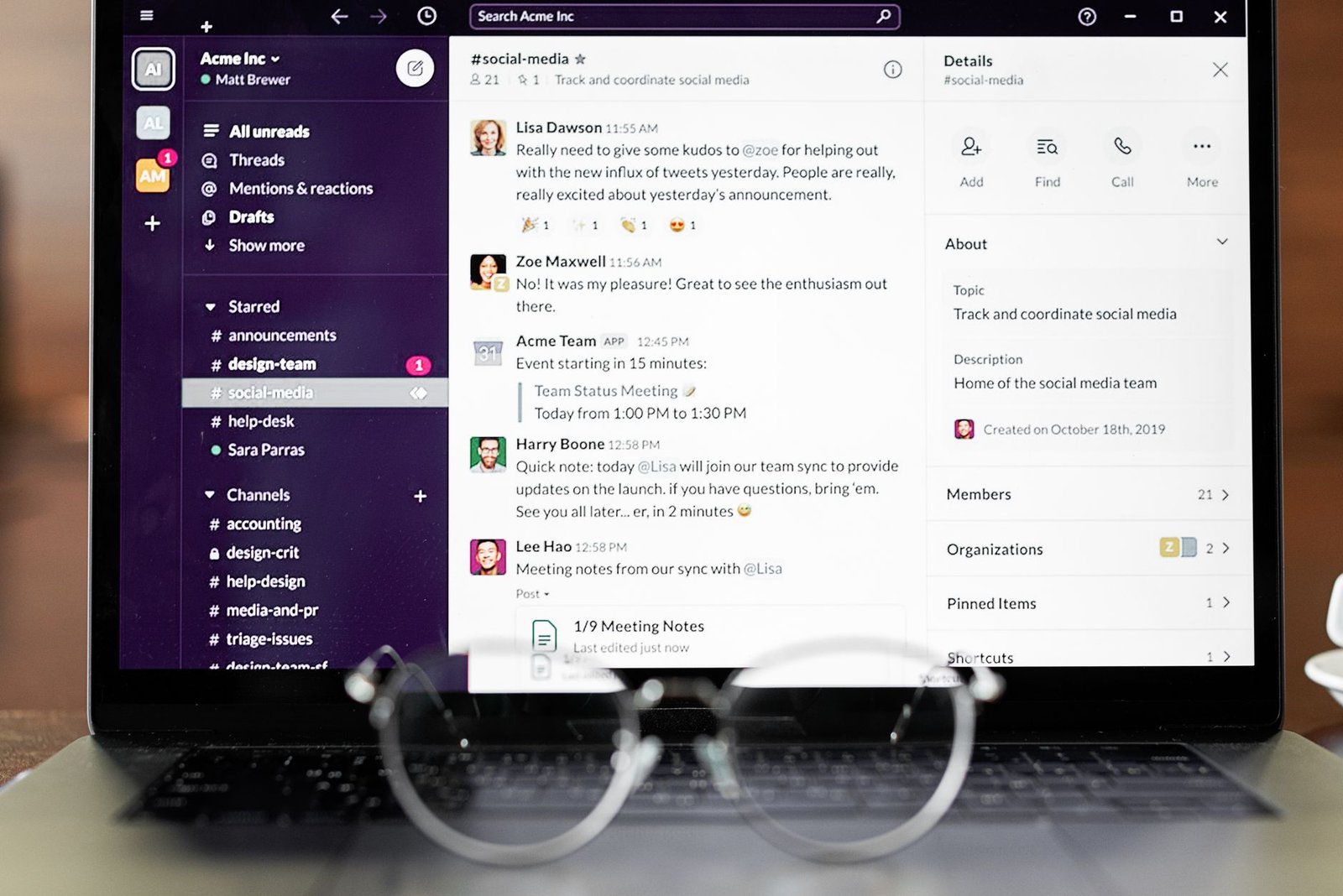
Imagine a workplace where your digital assistant doesn’t just send reminders but actively helps you do your job—faster and smarter. Salesforce is transforming this vision into reality by reinventing Slackbot, evolving it from a mere notifier to a robust AI agent reshaping the way we work.
Key Takeaways
- Salesforce’s revamped Slackbot is a full-fledged AI agent, enhancing workplace productivity.
- The new features include advanced data search and document drafting capabilities.
- Anthropic’s Claude LLM currently powers Slackbot, with plans to incorporate other AI models soon.
- The pilot run showed significant time savings and high user satisfaction at Salesforce.
- Salesforce envisions Slackbot as the central hub for AI interaction in workplaces.
The Transformation of Slackbot: From Notifications to Actions
Previously, Slackbot was like a trusty tricycle, simple but limited. Now, think of it as a high-speed Porsche. Salesforce has rebuilt Slackbot entirely, infusing it with advanced AI capabilities. It’s not merely a helper tool anymore; it actively searches through complex enterprise data, drafts documents, and even takes action for employees when needed. This transformative shift places Slackbot at the forefront of the workplace AI evolution, often referred to as “agentic AI”—where software doesn’t just assist but works alongside humans to complete tasks.
Powering Slackbot: Why Choose Anthropic’s Claude?
Slackbot’s prowess comes from Anthropic’s Claude, a large language model (LLM) that meets stringent compliance standards required to serve U.S. federal entities. This partnership was partly paved by Claude being the singular provider with the necessary compliance when the project began. However, Salesforce plans to diversify, exploring relationships with other AI providers like Google’s Gemini and potentially OpenAI. This evolving AI infrastructure underscores a broader strategic aim: commoditizing LLMs into essential components akin to CPUs, democratizing AI access and capability.
Real-World Impact: Pilot Testing at Salesforce
To gauge the impact of Slackbot, Salesforce conducted an internal pilot across its vast 80,000-employee network, and the results were impressive. An astonishing two-thirds of employees tried the new Slackbot, with 80% of them integrating it into their routine, leading to a 96% satisfaction rate. The time savings were tangible, with reports indicating an average of two to 20 hours gained weekly per user. This shift wasn’t solely a top-down initiative; 73% of adoption occurred through peer-driven sharing, highlighting the organic enthusiasm for the tool.
Future of Workplace AI: Looking Ahead
The reinvention of Slackbot is more than just a product update; it’s a fundamental change in how Salesforce envisions work will be done. As AI continues to permeate our workspaces, companies won’t deploy separate applications for AI tasks. Instead, tools like Slackbot will integrate seamlessly into everyday environments. This centralization offers not just convenience but also a depth of context rarely achieved by standalone AI apps.
Salesforce’s strides with Slackbot suggest a future where AI agents streamline operations across various domains, enabling employees to focus on strategic tasks rather than mundane operations. The landscape of AI is rapidly evolving, and as these systems become more integrated into our workflows, the possibilities are both exciting and expansive.
The advancements we’re witnessing in AI, typified by Salesforce’s Slackbot, are paving the way for a future work environment filled with digital super-agents that promise to elevate human productivity and innovation to unprecedented heights.
