



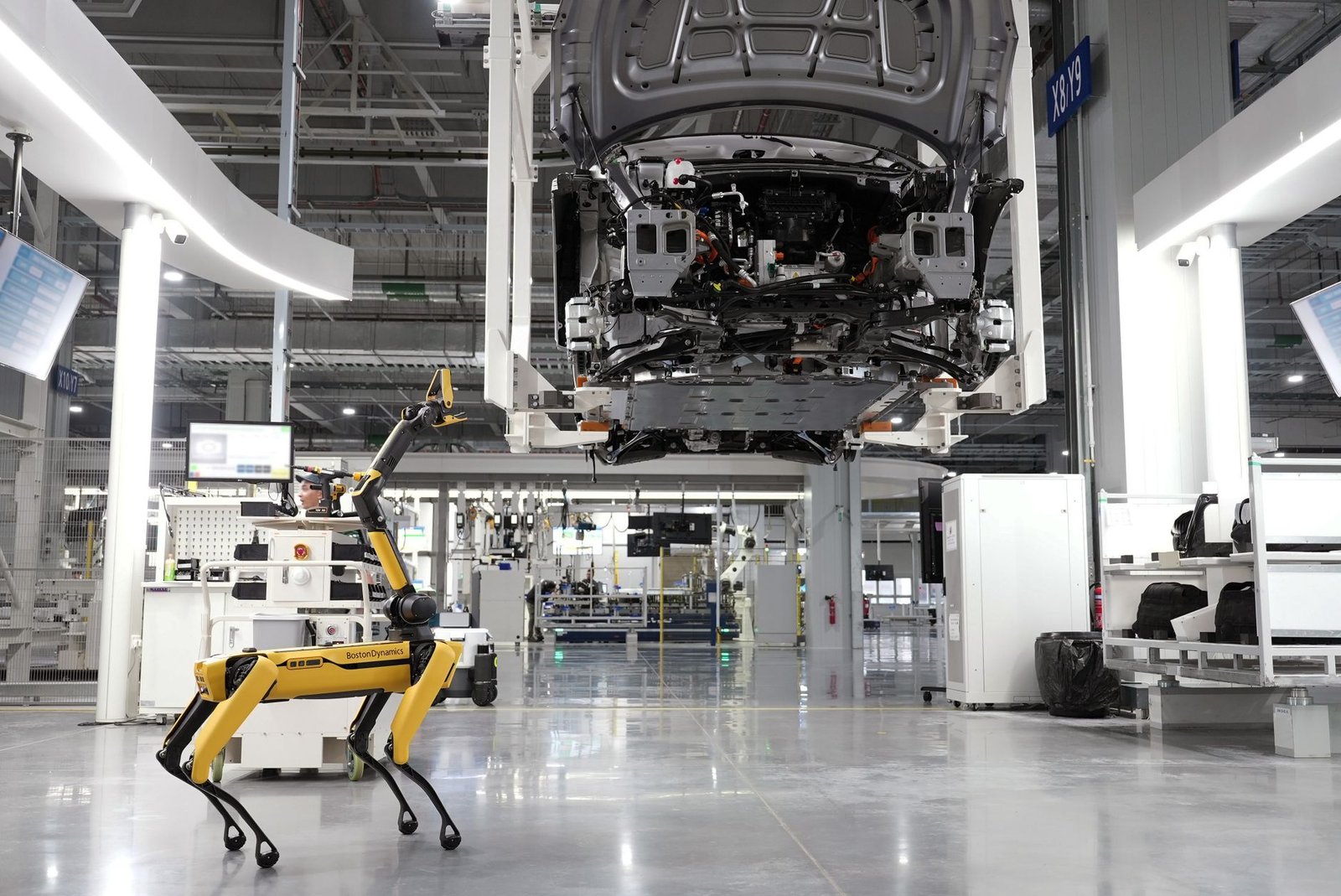
Imagine a domino effect occurring within the automotive industry, where each fallen piece signifies another shift in global manufacturing strategies. This scenario reflects the turbulent times Volkswagen faces as it assesses the potential closure of four crucial factories. These decisions could redefine its future and the automotive landscape as we know it.
Key Takeaways
- Volkswagen is contemplating closing up to four factories in Germany.
- The automaker plans to reduce its workforce by 15% due to declining profits and sales.
- Though EV sales increased in Europe, North American and Chinese markets are struggling.
- External factors like tariffs have exacerbated financial challenges.
- This shift signals broader implications for the future of AI and automation in manufacturing.
Navigating a Shifting Economic Terrain
The automotive giant Volkswagen finds itself at a pivotal crossroad, examining the closure of several German factories. The company’s journey through the past few years has been far from smooth, with profits nosediving by 44% in 2025 alone. What drove this plunge? While EVs (electric vehicles) gained traction in Europe, they underperformed in North America and China, regions vital to maintaining global dominance.
Understanding the Challenges
The critiques Volkswagen faces aren’t simply about numbers on a financial report. It’s a multifaceted challenge involving market demands, geopolitical tensions, and internal restructuring. As sales flatlined, operating margins—essentially the profit made from each dollar of sale—suffered, shrinking to less than half of previous values.
Ever-Increasing Global Competition
Volkswagen is not alone in this struggle. The automotive industry is universally experiencing rapid changes, pushed by the advent of AI and automation. The introduction of AI offers both opportunities and hurdles, as companies need to reconcile traditional manufacturing practices with cutting-edge technologies. Just as a chameleon adapts to its environment for survival, industries must evolve to stay competitive.
A Push Towards Innovation
As Volkswagen maneuvers through these challenges, the company isn’t just looking to scale back; it’s focusing on technological advancement. Even though job cuts hint at an alarming reduction—potentially twice the previously announced 50,000 jobs by 2030—these figures also reflect an intention to streamline operations for a more tech-centric future.
The Role of AI in Modern Manufacturing
Incorporating **AI** in manufacturing can transform workflows and enhance productivity by automating repetitive tasks and optimizing processes. For instance, using machine learning models, manufacturers can predict equipment maintenance needs before a malfunction occurs, thereby minimizing downtime.
Real-World Analogy: Navigating with a GPS
Consider the impact of a GPS in unfamiliar terrain. Traditional maps are useful, but a GPS recalculates routes dynamically, offering real-time updates and traffic conditions, potentially getting you to your destination more efficiently. Similarly, AI introduces dynamic insights and predictions to manufacturing, helping companies navigate complex challenges smoothly.
Looking Towards the Horizon
The potential factory closures and mass layoffs are more than just a response to financial woes; they are indicative of a broader shift towards embracing technological innovation within the global automotive industry. As automation and AI become integral to production processes, the future of manufacturing will likely prioritize flexibility and technological competence over mere scale.
This transformation heralds an exciting era where **AI** isn’t just a tool but a strategic partner in shaping industries. As Volkswagen adapts, its journey will influence how artificial intelligence continues to integrate into global operations, encouraging other sectors to follow suit. The balance of optimizing human talent and technological prowess will be pivotal.
