



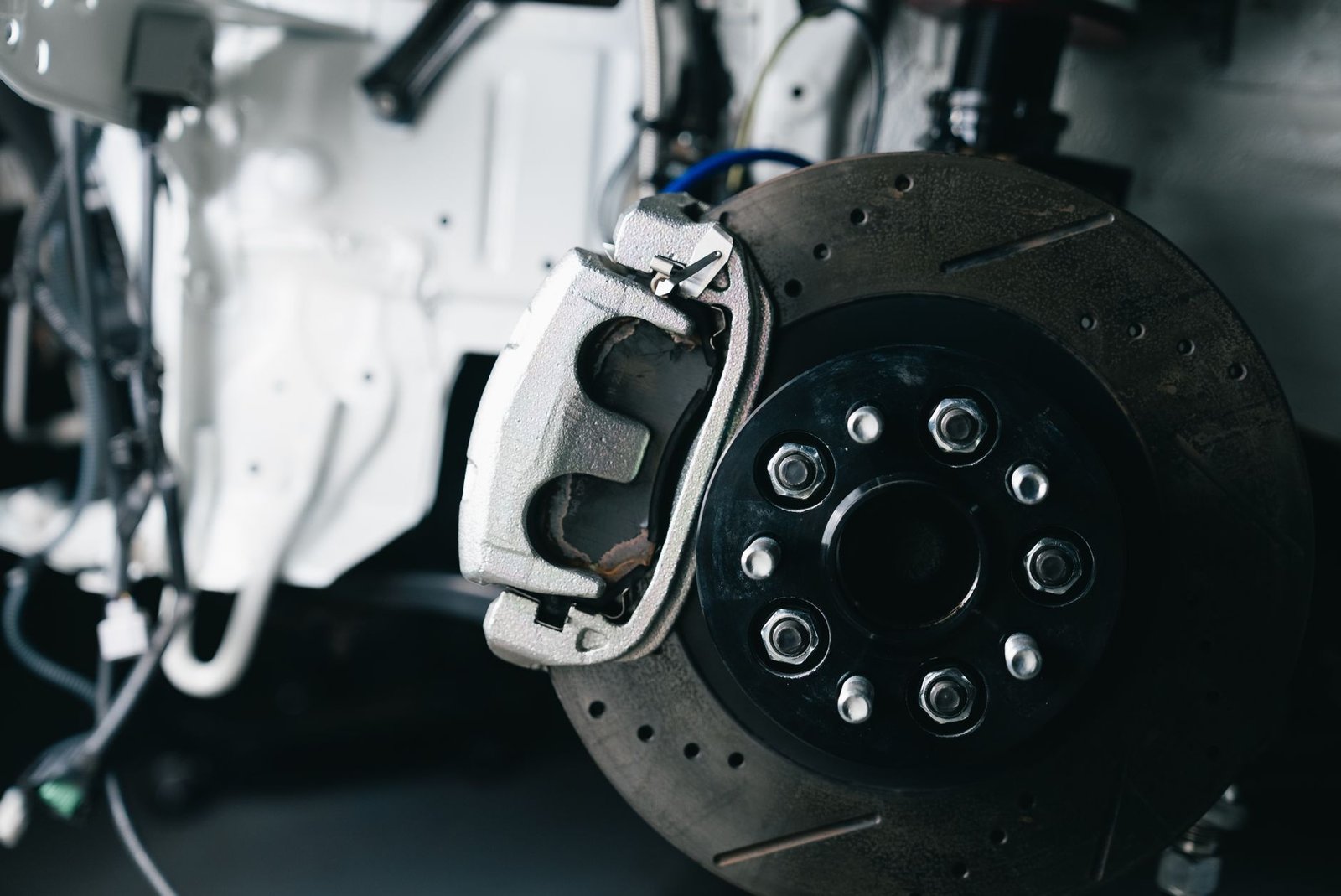
Imagine you’re cruising down the highway only to suddenly discover your brakes aren’t responding. This alarming scenario is at the heart of a federal investigation into **General Motors’ (GM) latest safety concerns**. Let’s delve deeper into what’s causing this scrutiny and what it might mean for the future of **automotive technology**.

Key Takeaways
- Over 1.1 million GM vehicles are under investigation for potential brake failures.
- The issue centers on GM’s **”eBoost” brake-by-wire system**.
- 227 incident reports have been filed with NHTSA, expanding to 745 when GM-reported cases are included.
- The investigation includes vehicles developed for Honda and Acura.
- Although incidents have resulted in injuries, there have fortunately been no fatalities reported.
The Heart of the Problem: eBoost System
At the center of this unfolding issue is GM’s **”eBoost” brake-by-wire system**. Unlike traditional braking systems that rely on hydraulic fluid pressure, brake-by-wire systems are driven mostly by electronic controls. Think of it as the difference between pressing a piano key (traditional brakes) and using a synthesizer key (eBoost). In GM’s system, electronic signals communicate with the car’s braking mechanisms, enhancing efficiency and performance.
Why is Brake-by-Wire Under Scrutiny?
The brake-by-wire system, while innovative, is facing criticism due to reported **spindle fractures**. Essentially, this means a component vital for translating electronic signals into brake pressure can break. Theoretically, even if this occurs, vehicles should maintain critical safety functions such as **antilock braking systems (ABS)**, **traction control**, and **stability control** until the car comes to a complete stop. However, numerous drivers have reported otherwise, mentioning a complete loss of braking functionality which poses serious safety hazards.
The Scope of the Investigation
On record, the **National Highway Traffic Safety Administration (NHTSA)** has received 227 direct reports related to this issue. When combined with GM’s own reports, the total climbs to 745 cases. Out of these, 22 led to accidents with five cases causing injuries. Despite no fatalities so far, the potential risks continue to loom large. These figures underscore a crucial need for scrutiny, not just for GM, but potentially for other manufacturers exploring advanced braking technologies.
Implications for the Automotive Industry
While GM’s woes currently dominate headlines, the broader implications are significant. Automotive manufacturers are ushering in an era of **electric and autonomous vehicles** which rely extensively on electronic systems. This incident highlights the nascent nature of some of these technologies and the growing pains associated with their implementation. It emphasizes the critical need for robust **systems checks** and ongoing **software updates** to mitigate potential risks.
Real-World Analogy: Learning from History
This situation might remind some of earlier technical challenges within the aviation industry. The transition from cable-driven flight controls to **fly-by-wire systems** in aircraft was fraught with similar concerns. Over time, however, these systems proved reliable and became the norm, underscoring the potential for brake-by-wire systems to eventually achieve a similar standard in automotive safety.
Looking Ahead: The Role of AI
As the investigation unfolds, the role of **Artificial Intelligence (AI) in automotive safety** becomes ever more crucial. AI could enhance predictive maintenance, flagging potential hardware malfunctions before they happen. Furthermore, AI-driven systems could improve real-time decision-making processes within vehicles, making them safer for on-road use. This scrutiny, while challenging now, may become a catalyst for AI innovations aimed at creating safer, smarter vehicles.
