



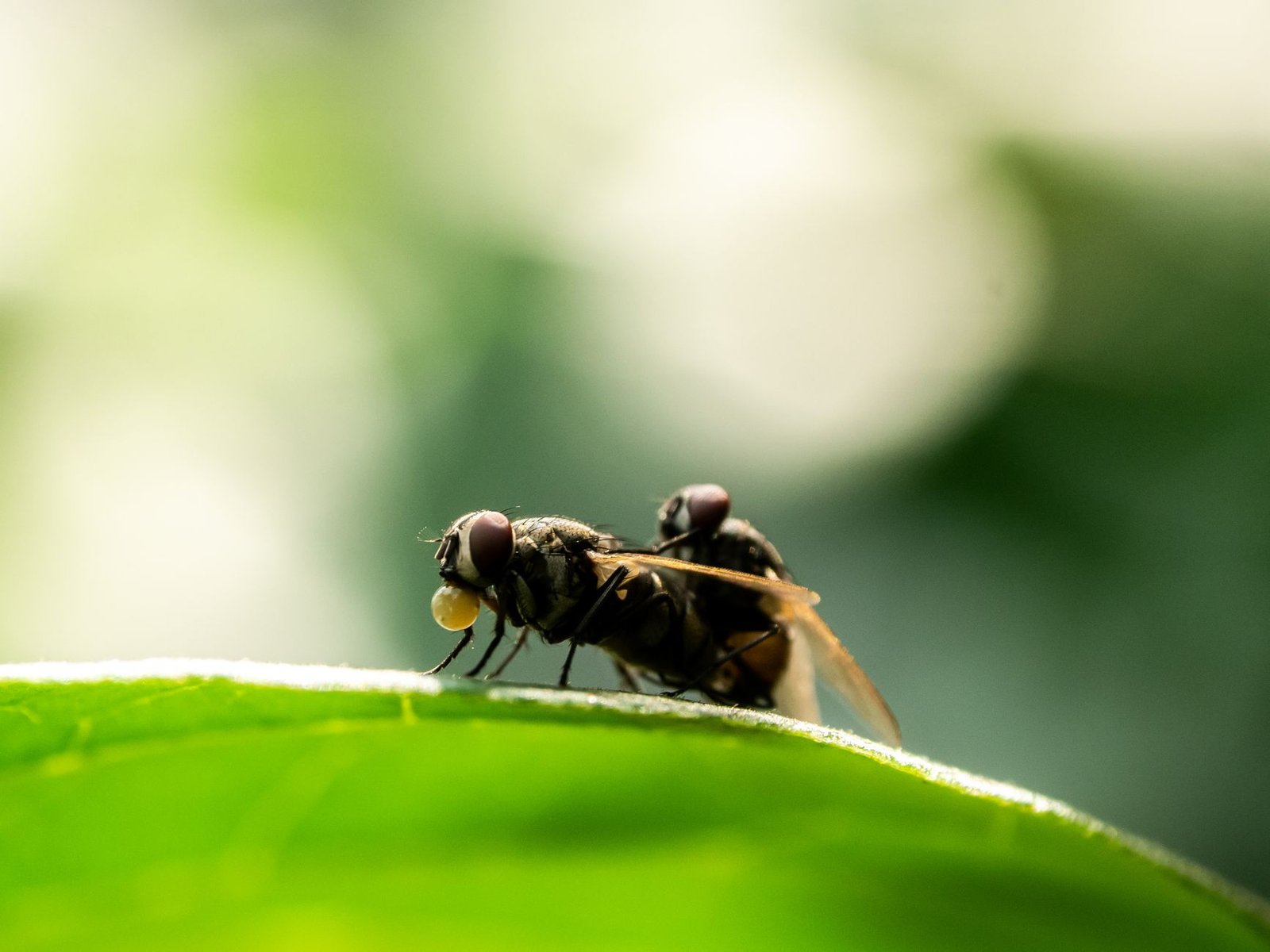
Imagine traversing a maze with scent as your only guide—an invisible thread in a world full of chaos. This is the reality for fruit flies as they chase after odors in the wild, where turbulent air crafts a complex dance of scent trails. But how do these tiny creatures decode such ephemeral signals with a brain smaller than a pinhead?
Key Takeaways
- Fruit flies can trace erratic odor trails with remarkable precision.
- The traditional “surge and cast” model is being challenged by new insights.
- Advanced brain mechanisms in fruit flies aid in olfactory navigation.
- Understanding this may inspire AI systems to solve complex navigation tasks.
Understanding the Problem
In searching for a source of smell, **fruit flies** follow what is known as **odor plumes**—streams of scent molecules mingling in the air. Yet, when these plumes break apart in a chaotic environment, it becomes a challenge to trace them back to their origin. Biologists once believed that the flies operated on a simple reflexive loop known as “surge and cast.” This theory suggested flies would surge upwind when they detect odor and then cast from side to side when it’s lost, waiting for the next whiff.
Breaking Down Old Assumptions
Research spearheaded by neuroscientist Vanessa Ruta at Rockefeller University offers a fresh perspective. The traditional model failed to account for the fly’s ability to track inconsistent odor trails over long distances. **Chemical cues** dispersed in the atmosphere are elusive, often diluted and unreliable. However, through innovative experimentation, Ruta’s team has uncovered that fruit flies employ more complex neural strategies than previously conceived.
Beyond Simple Reflexes
One of the tools employed in these groundbreaking studies is a **treadmill for flies**—an experimental setup that allows scientists to observe how flies respond to controlled odor bursts. This setup has shown that fruit flies utilize sophisticated decision-making processes rather than relying purely on instinctive behaviors. Such findings contrast sharply with the old notion of hardwired reflexes and hint at cognitive processes that allow flies to interpret and act on sparse information dynamically.
An Everyday Analogy
Consider a person trying to locate a café by following the scent of coffee on a bustling city street. Just like the person might need to navigate around obstacles and pedestrians while recalibrating their sense of direction based on intermittent whiffs of coffee, fruit flies perform a similar task in their natural habitat. They adapt to ever-shifting cues, demonstrating an impressive level of navigation amidst uncertainty.
Implications for AI Navigation
These revelations about fruit flies could have intriguing implications for the field of **artificial intelligence**. By understanding the neural mechanisms that empower these insects to solve complex problems in real-time, researchers can draw parallels to enhance **AI navigation** systems. Imagine drones that track pollution sources through inconsistent odor trails or autonomous vehicles negotiating routes using uncertain environmental signals. The principles gleaned from fruit fly navigation might well form the basis for algorithms that perform similar tasks under unpredictable conditions.
As we augment our ability to model sophisticated biological processes, the question now arises: how can we harness these insights to craft smarter, more adaptable AI? The journey with fruit flies is a testament to nature’s ingenuity and a prompt for us to look beyond conventional paradigms. The future of AI could well hinge on lessons learned from the humble fruit fly, transforming how machines interpret and interact with their environments.
