



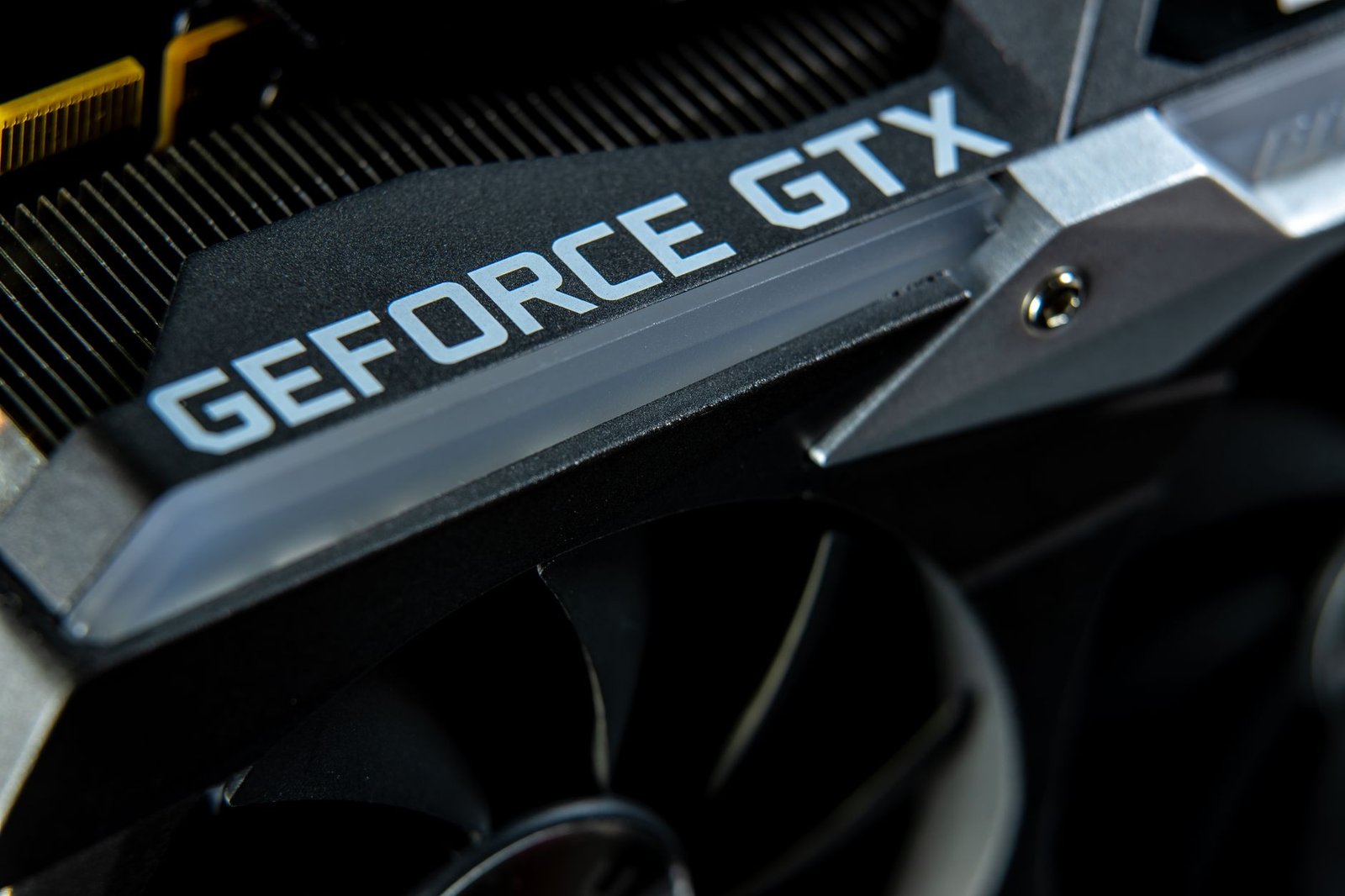
Just when you thought you’ve seen it all in the world of technology, **Nvidia** aims for the moon—literally. Imagine a future where powerful **graphics processing units (GPUs)** dominate not only Earth but also provide the computational prowess to explore the cosmos. Nvidia is setting its sights on making this interstellar dream a reality.

Key Takeaways
- Nvidia is extending its GPU technology beyond Earth, targeting lunar missions.
- GPUs are integral for processing complex tasks like AI computations and simulations.
- This lunar venture is part of a broader initiative to employ AI in space exploration.
- Advanced computing on the moon could revolutionize how we approach future space missions.
- This initiative signals a new era of tech collaboration between terrestrial and celestial endeavors.
The Role of Nvidia’s GPUs in Space Exploration
**Graphics Processing Units (GPUs)** are integral for handling complex data calculations rapidly. Originally designed to render images and improve gaming experiences, they now play a foundational role in **artificial intelligence (AI)** by supporting deep learning algorithms. These are systems that mimic human thought processes to solve problems. When it comes to space, the ability to process large amounts of data quickly and efficiently is paramount. Imagine solving puzzles with millions of pieces at rocket speed—this is the power Nvidia is bringing to the lunar surface.
Why the Moon Needs GPUs
In space missions, precise calculations and data processing are crucial for success. Nvidia’s GPUs excel at parallel processing, making them perfect for multi-tasking heavy computational loads. On the moon, these GPUs can handle AI-driven navigation, map lunar surfaces in real-time, and manage data from numerous sensors. Their efficiency is akin to having a team of engineers working tirelessly on complex problems, but instead, it’s all being managed by a single chip.
A Real-World Analogy: The Moon as a New Data Center
Think of the moon as a cutting-edge **data center**, but instead of housing servers, it will be equipped with state-of-the-art GPUs. In a data center, information flows seamlessly across networks, processed and refined by powerful machines. The same revolutionary technology could soon reside on lunar soil, transforming the moon into an outpost for technological and scientific advancement.
Challenges and Opportunities
Deploying GPUs on the moon is far from easy. Space environments are inhospitable due to extreme temperatures and radiation. Nvidia faces the challenge of designing hardware that withstands these conditions. However, overcoming these challenges opens numerous opportunities. Incorporating AI in space exploration could help solve issues like predicting asteroid trajectories or optimizing resource extraction on celestial bodies.
The Future of AI and Space Exploration
This initiative indicates a new frontier where AI will play a crucial role beyond our planet. As Nvidia’s GPUs prove their worth on the moon, we’ll likely see more advanced technologies opening the universe for exploration. **Artificial Intelligence** will not only assist astronauts but could also initiate autonomous missions, exploring regions unknown to humans. This celestial leap promises to deepen our understanding of space and offer new solutions to earthly challenges.
