


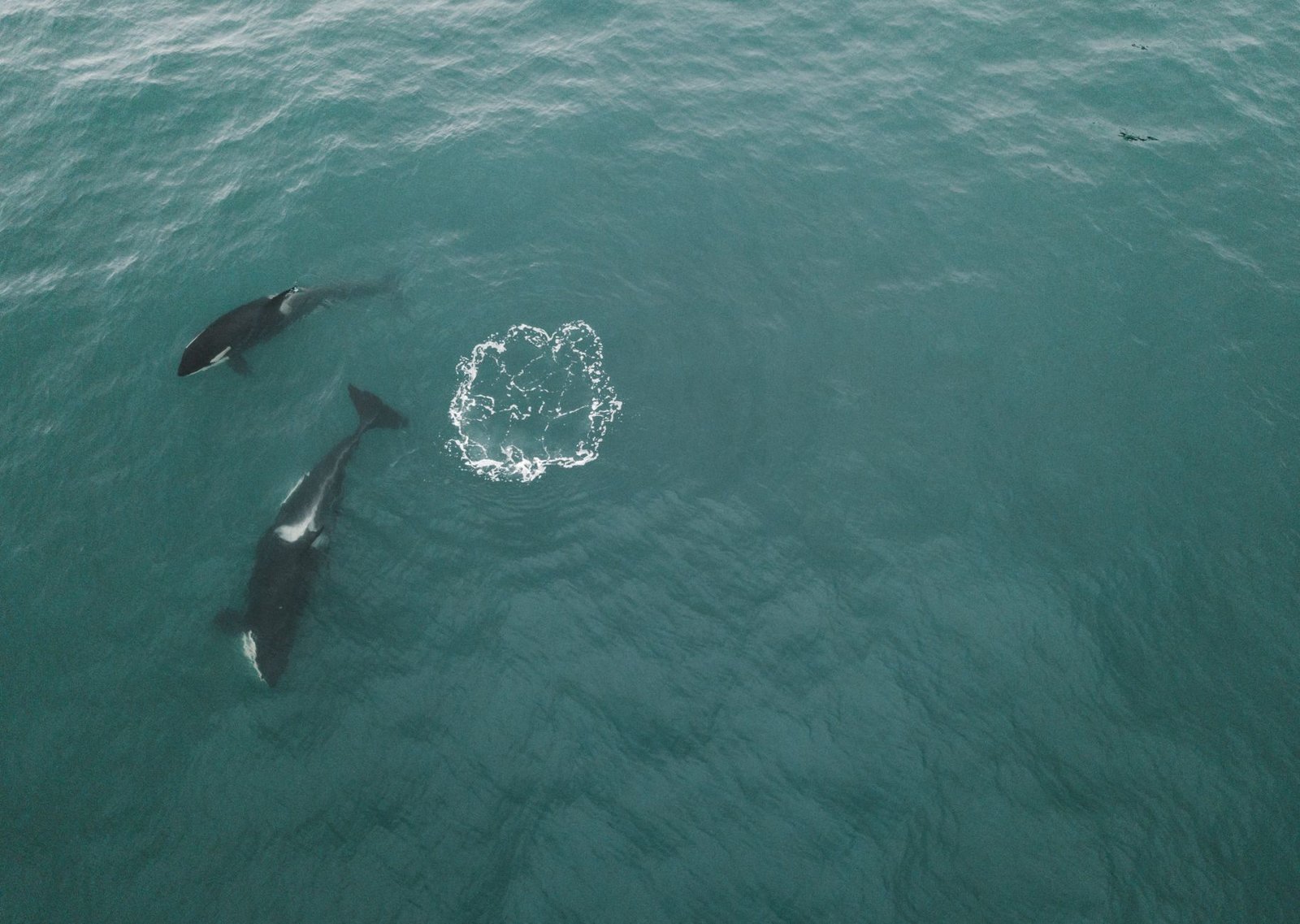
In a striking display of nature’s raw power and intelligence, orcas in the Gulf of California have been observed doing something both breathtaking and perplexing. Scientists captured footage of these marine giants using extraordinary force to ram sunfish, causing the fish to explode into fragments. This behavior offers a fascinating glimpse into the complexities of orca social structures and their **learned behaviors**. But what does this mean for our understanding of orcas and, in an unexpected twist, machine learning?
- Orcas exhibit unique and culturally learned behaviors, hinting at advanced social structures.
- This new observation shows orcas use explosive force against sunfish, possibly for feeding efficiency or play.
- Such behaviors reflect intricate **cooperative hunting strategies** among orca pods.
- Understanding these behaviors can provide insights into AI pattern recognition.
- The study of orca social learning can inform AI development in anticipation and decision-making.
Unpacking Orca Intelligence and Culture
Orcas, often dubbed the wolves of the sea, display a rich tapestry of culturally learned behaviors. These majestic creatures have long fascinated scientists with their intelligent and complex group dynamics. Orcas hunt in pods, utilizing cooperative strategies akin to humans using teamwork. Such strategies include herding prey and devising clever ways to unbalance and capture their food, demonstrating formidable **social intelligence** and adaptability.
The Sunfish Episode: More Than Meets the Eye
The recent orca behavior of ramming sunfish might seem puzzling at first. Sunfish, with their unique body shape, are not a typical main course for orcas, leading researchers to delve deeper into the potential reasons behind such behavior. According to Kathryn Ayres from Beneath The Waves, this might aid younger orcas in feeding or simply serve as a form of play. This is indicative of orcas’ famous playfulness and **curiosity**.
Cultural Learning in Orcas
Orcas’ ability to pass down learned behaviors across generations is a phenomenon known as **cultural transmission**. In simpler terms, this is knowledge and habits shared through non-genetic means, much like how humans pass down culture and knowledge. This ability is not only amazing but also a key area of interest in both animal behavior and AI research.
Cooperative Strategies: A Social Classroom
The act of ramming a sunfish is not an isolated behavior. Orcas also engage in practices like ramming whale sharks or creating waves to destabilize penguins on ice floes. These actions highlight their capacity for **complex planning and team coordination**. Imagine a group of expert players orchestrating a flawless play in a sports match—each move is precisely timed and executed, which is much like how orcas hunt.
Linking Orca Behavior to AI Insights
What do these incredible marine creatures have to do with AI? As it turns out, studying orca behavior may provide profound insights into how machines learn. Just as orcas spread knowledge across generations, AI systems can be designed to learn from patterns seen in data and adapt to new scenarios through machine learning. This involves **pattern recognition**, where AI is able to anticipate and respond to inputs in a way that mirrors biological learning processes.
A Real-World Example: Machine Learning in Action
Consider how a self-driving car uses sensors and algorithms to recognize obstacles and navigate roads. Much like orcas adapting their hunting techniques, these AI systems adjust to varied environments, learning over time to improve performance and safety. Both orcas and AI rely on the concept of learning from past experiences to anticipate future scenarios.
Looking Ahead: What This Means for AI
The exploration of orca behavior underscores the untapped potential in understanding intelligence, not just in nature but also in the realm of artificial intelligence. As we continue to decode the social learning and adaptability of orcas, it may enlighten new approaches to AI that emphasize prediction and cooperative interaction. Ultimately, this kind of interdisciplinary research could lead to AI systems that are not just intelligent, but **innovatively adaptable**, closely mirroring the ingenuity of nature’s most sophisticated creatures.
