

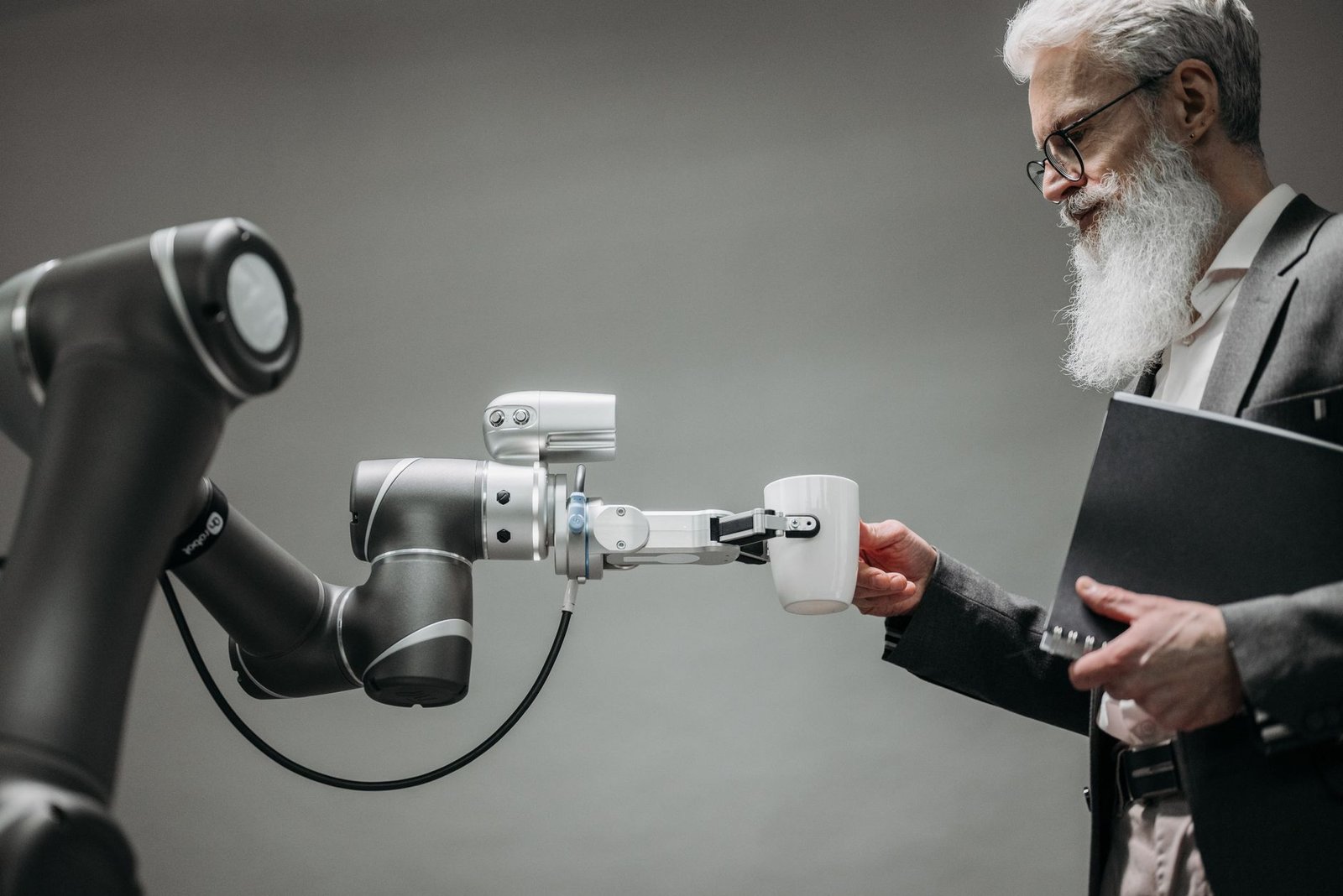
Imagine a world where robots autonomously learn to perform complex tasks without human intervention, bolstered by the intelligence of AI. This isn’t science fiction—it’s happening now thanks to **AI coding agents** tasked with teaching robots skills ranging from installing GPUs to cutting zip ties.
- AI agents are autonomously training robots for intricate tasks.
- ENPIRE is a groundbreaking framework facilitating this autonomy.
- The NVIDIA GEAR lab spearheads this transformative research.
- Potential applications span automation and advanced robotics fields.
- The future of AI promises even greater levels of machine learning capability.
Revolutionizing Robot Training with AI Agents
What if robots could learn skills overnight and execute them flawlessly the next day? This is the cutting edge of artificial intelligence. By empowering robots with AI coding agents, these machines can now learn how to complete specific tasks on their own. The brain behind this development is ENPIRE, a framework that enhances AI models’ ability to utilize tools by integrating capabilities such as memory and adaptive feedback loops.
Understanding the ENPIRE Framework
ENPIRE, an acronym for a versatile **agent harness** framework, serves as vital scaffolding around AI models. This system, created collaboratively by Nvidia’s GEAR lab, Carnegie Mellon University, and the University of California, Berkeley, allows AI to interact seamlessly with physical tools. Essentially, ENPIRE gives AI the resources to perceive context and constraints, making it possible for robots to fine-tune their actions autonomously.
How AI Teaches Robots to Master Tasks
AI coding agents use complex algorithms and simulation environments to train robotic arms. Imagine a master craftsman teaching an apprentice by providing feedback and the right tools. AI does exactly that but exponentially faster, processing vast amounts of data to optimize robot skillsets within the framework of ENPIRE. The Nvidia GEAR lab reports that their robotic systems now improve effectively overnight, with human overseers reviewing progress the next morning.
An Analogy: Teaching a Skill
Consider the way a person learns to tie shoelaces; it starts with a tutorial followed by repeated practice until muscle memory takes over. Similar principles apply here. Through repeated simulations and task trials, robots, guided by AI, eventually master the physical dexterity needed to insert a GPU into a fragile socket or cut a zip tie cleanly.
Real-World Implications and Future Directions
The implications of this technology are profound across various fields. Automated on-the-fly training means robotics can adapt to unforeseen scenarios in supply chain operations or even during surgical procedures, significantly enhancing efficiency and safety. The advancements lend themselves to industries seeking seamless automation and reduced error rates.
Looking ahead, the continued evolution of AI in robotics marks a defining moment in technology’s trajectory. As AI coding agents become even more sophisticated, they could empower robots with a level of autonomy previously reserved for science fiction. This progression may redefine how we interact with machines, ushering in a new era where AI not only complements but profoundly enhances human capability and ingenuity.
