



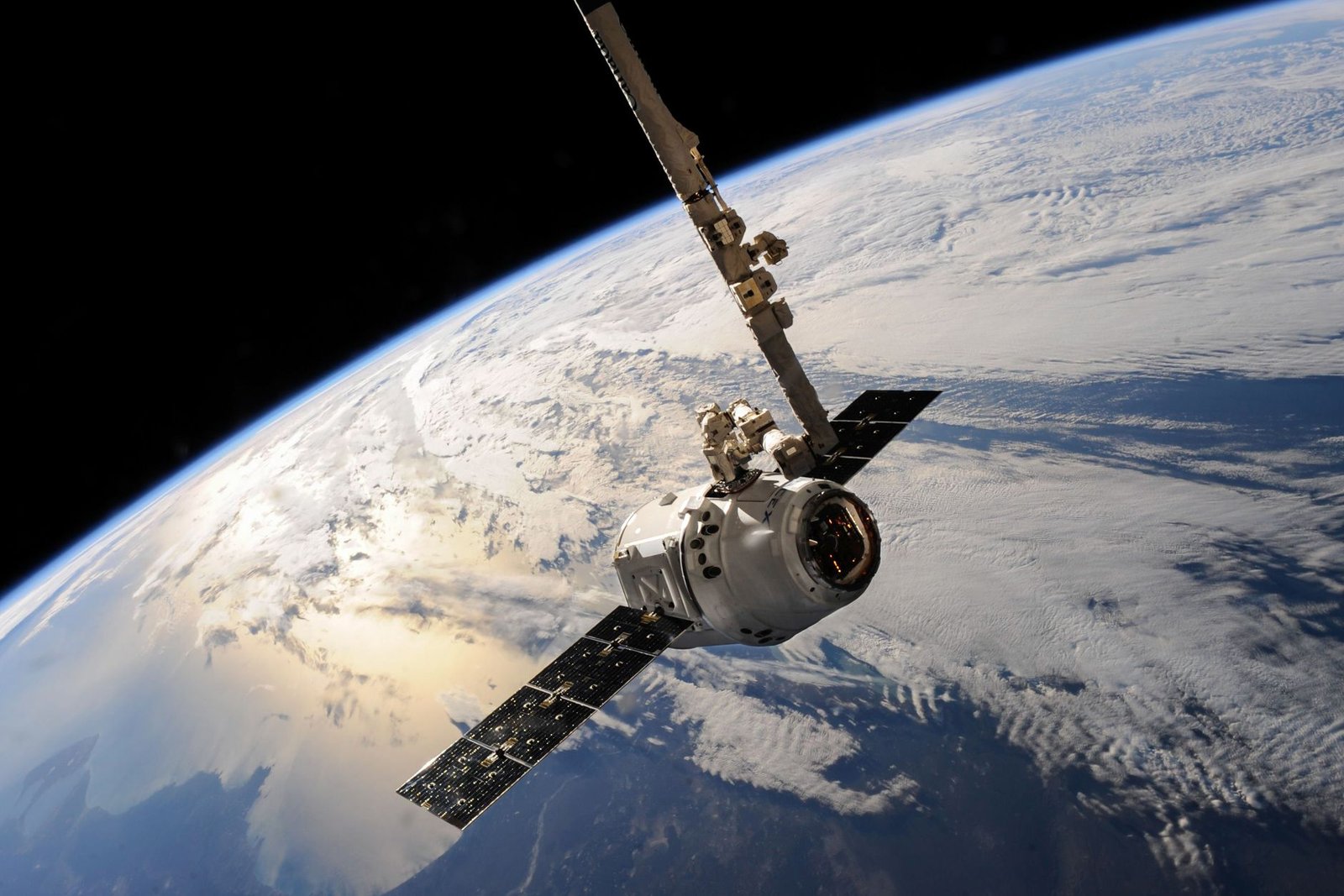
Imagine a world where satellites aren’t just passive observers but active participants in gathering vital data. This is no longer a distant dream. A recent development in satellite technology has made this scenario a reality, elevating our capabilities to monitor Earth like never before.
Key Takeaways
- Recent advancements have allowed satellites to autonomously locate specific objects or phenomena.
- This technology represents a significant leap in data efficiency and cost reduction.
- It improves response times in critical situations like natural disasters.
- This innovation could revolutionize scientific research and environmental monitoring.
The Evolution of Satellite Intelligence
Traditionally, **satellites** have functioned like a digital camera in the sky, simply snapping pictures and sending them back to humans for analysis. However, a game-changing advance has taken place. In April, for the first time, an Earth observation satellite not only captured images but autonomously identified specific objects without human intervention. This leap was possible thanks to the integration of artificial intelligence (AI) into satellite systems.
Why Does It Matter?
The ability for a satellite to discern and locate specific features or events on its own dramatically enhances the **efficiency and utility** of space-based data. Previously, data analysis was a time-consuming process that required substantial human input. With AI, satellites can cut through the noise, sending only the most pertinent information to human operators.
For instance, consider the vast amounts of data required to monitor **natural disasters**. Satellites equipped with AI can quickly identify changes in landscapes, such as the spread of floods or wildfires, and alert officials in real-time. This rapid response capability can save lives and mitigate damage by enabling quicker decision-making.
Demystifying Autonomous Searching
At the core of this innovation is a branch of AI known as **machine learning**. Imagine teaching a satellite to distinguish between thousands of cloud formations to spot just the one that indicates a brewing storm. It’s akin to training a pet to fetch a specific item from a room full of toys. The satellite uses algorithms trained on months of historical data to predict where and what to look for.
Machine Learning in Space
Machine learning allows satellites to improve their performance over time, just like a human learns from **experience**. By analyzing patterns and comparing them against an array of data, the satellite’s onboard AI can perform complex tasks such as identifying crop growth, monitoring deforestation, or even spotting illegal infrastructure development.
The Broader Implications for Humanity
The implications of smart satellites extend well beyond efficiency and rapid response. They have the potential to drive monumental changes in **agriculture, environmental policy**, and **urban planning**. Tracking agricultural produce health, optimizing resource allocation, and enforcing environmental protection regulations become simpler and more effective tasks with smart satellites in orbit.
Moreover, by providing more accurate and timely data, these satellites can aid in **scientific research**, helping scientists reach a deeper understanding of climatic and geophysical phenomena.
What’s Next for Satellite AI?
The success of this autonomous satellite technology marks just the beginning of **AI applications in space exploration and observation**. Developers aim to create even more sophisticated systems capable of performing varied analytical operations in real-time. These advancements pivot on advancements in AI algorithms, the expansion of powerful computational capabilities, and more robust satellite hardware.
In the near future, we anticipate even more seamless integration of satellites into **everyday applications**. From precise weather forecasting that saves lives to efficient resource management that sustains communities, AI-enhanced satellites will likely become indispensable tools.
As this technology evolves, the possibilities are as boundless as space itself, promising a future where satellites play a crucial role in both scientific exploration and the stewardship of our planet.
