




Imagine a robot with the remarkable ability to sort through our daily lives, distinguishing between what’s important and what’s merely noise. Welcome to the cutting-edge world of AI-driven spam detection in the physical world—a frontier where AI leaves the realm of email and social media to tackle the clutter of the tangible universe.
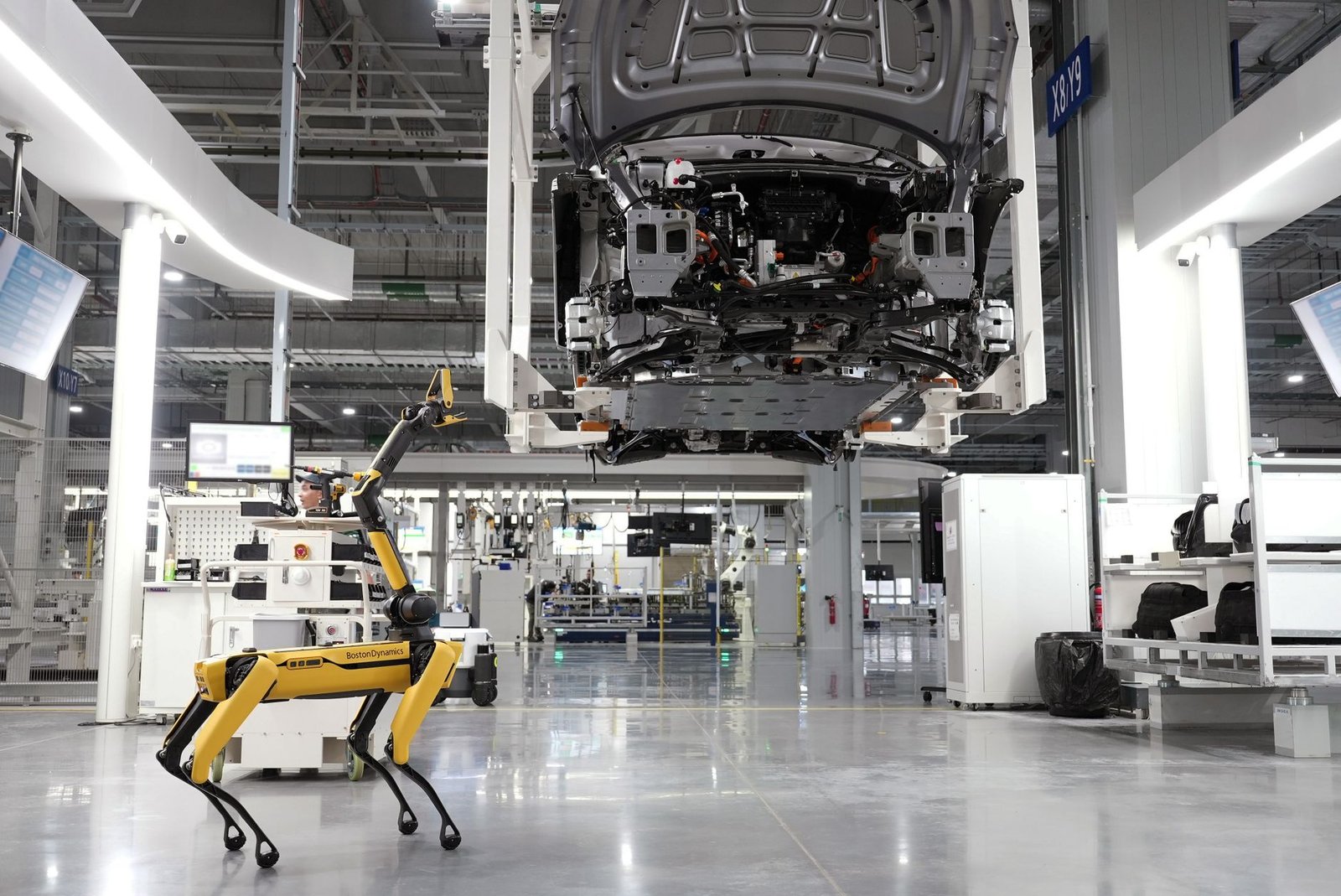
Key Takeaways
- Spam-detecting AI has moved beyond digital applications to physical environments.
- The system was trained entirely in virtual simulations before being deployed in real-world scenarios.
- This technology opens up new possibilities for improving efficiency and productivity in various industries.
- Real-time data processing allows the AI to make swift and accurate decisions.
- The future could see this technology enhancing smart homes and workplaces by filtering relevant from irrelevant information.
The Evolution of AI Spam Detection
Traditionally, **spam detection** has been synonymous with filtering unwanted email or blocking irrelevant online ads. However, the idea of bringing this technology into the physical world introduces a revolutionary way for AI to manage physical space. Imagine walking into an office where a robot quickly sorts through mail, prioritizes packages, and discards unwanted flyers—all thanks to advanced AI systems initially honed in virtual environments.
From Virtual Simulations to Reality
The **training process** for this AI is entirely conducted in simulation—an environment created to mimic real-world conditions where the AI can learn and adapt without the constraints of physical space. Once adequately trained, the AI is then applied to a physical robot, allowing it to perform its duties in a tangible setting.
This virtual-to-reality journey ensures that the AI learns to identify patterns and anomalies effectively, akin to a student practicing in a flight simulator before piloting an actual plane. This approach drastically reduces development time and cost, as errors can be addressed in a risk-free environment.
Understanding the Tech: Machine Learning in Action
The core technology driving this innovation is **machine learning**—a branch of AI where systems can automatically learn and improve from experience. By digesting vast amounts of data in simulations, the AI develops a keen sense for differentiating between useful and irrelevant information. In layman’s terms, it’s like teaching a dog to fetch only the newspaper every morning while ignoring every stick and leaf in the yard.
Real-World Application: A Day in the Life of a Smart Office
Imagine a smart office where the primary goal is efficiency. An employee enters, and the AI-equipped robot seamlessly navigates the hectic space. It swiftly identifies a stack of papers that resembles company memos, directing them to the appropriate desk while relegating unsolicited advertisements to recycling. This capability not only saves time but also allows human employees to focus on more critical tasks, significantly boosting productivity.
Challenges and Considerations
While groundbreaking, deploying spam-detecting AI in physical environments isn’t without challenges. Accuracy, especially in distinguishing similar items, remains crucial. Moreover, **ethical considerations** such as privacy need to be carefully navigated. Developers must ensure these systems don’t inadvertently become too intrusive, protecting personal data while enhancing daily convenience.
The Future of AI in Physical Spaces
As we look ahead, integrating spam-detecting AI into everyday environments holds limitless potential. Future advancements could lead to **smart homes** that monitor incoming mail and packages, automatically managing household inventory or office environments where everything from memos to maintenance notices receives optimal attention.
The journey from virtual simulations to physical deployments marks just the beginning. As AI continues to shrink the gap between digital and physical realities, the horizon gleams with possibilities for increased productivity and enhanced living environments.
