



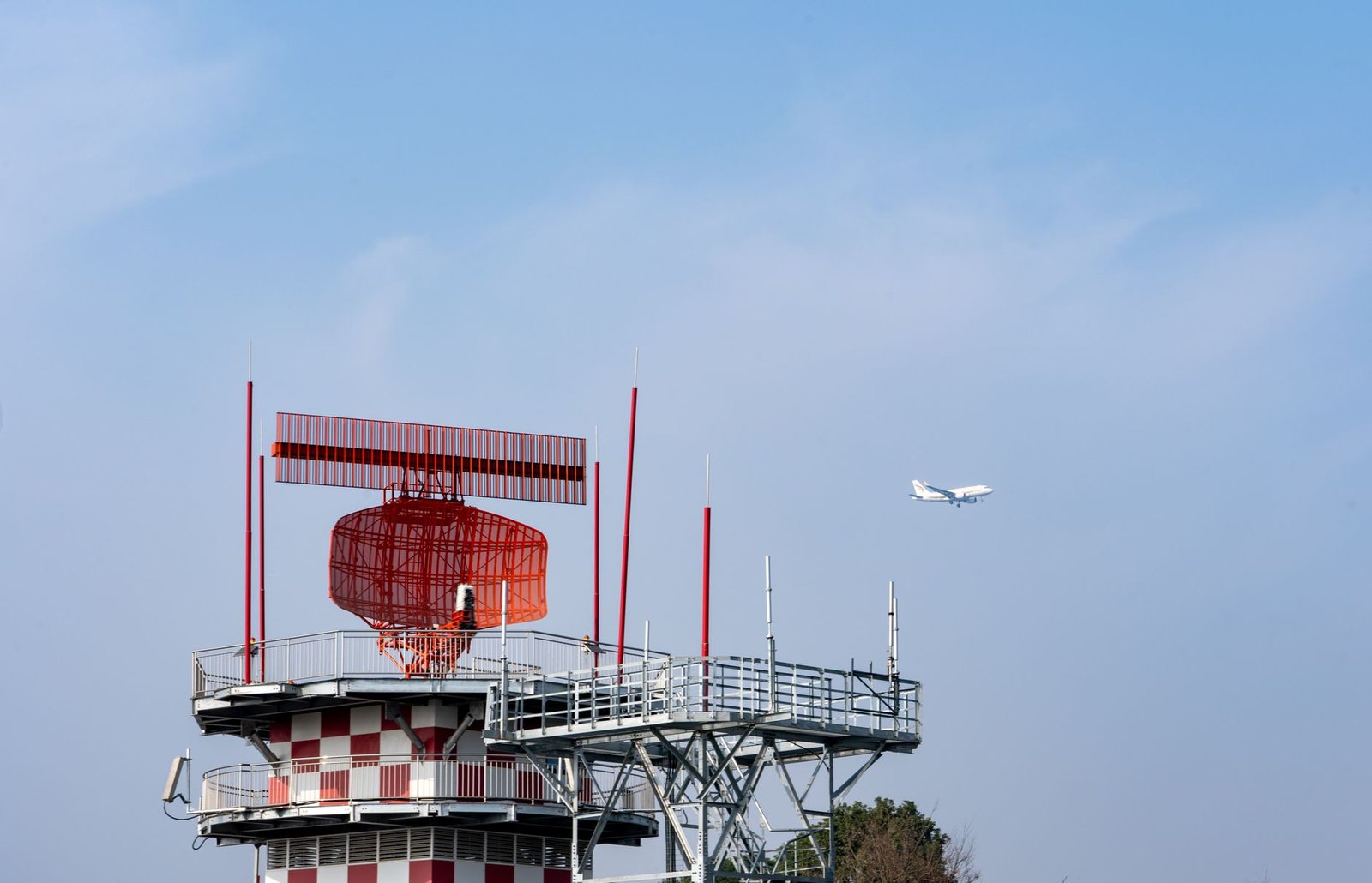
August 6th revealed a weakness in the U.S. national air traffic system when the Minneapolis Air Route Traffic Control Center suddenly lost radar contact and communication capabilities for nearly two hours. More than 1,100 flights across a vast 330,000 square mile region were disrupted. But as disruptive as this event was, an unexpected player is stepping up to offer solutions: Palantir Technologies.
Key Takeaways
- Palantir is aiming to modernize air traffic control systems with data-driven technology.
- The recent FAA outage highlighted vulnerabilities within the current systems.
- Advanced software from tech firms could ensure smarter, safer air travel.
- Elon Musk’s ventures have previously caused temporary air traffic disruptions, sparking innovations.
- The future of AI in air traffic control looks promising but requires careful implementation.
The Anatomy of an Air Traffic Meltdown
On any given day, the skies are a complex tapestry of routes crisscrossing each other with precise orchestration. However, in the blink of an eye, a minor hiccup can spiral into a major disruption. This was the case on August 6th, when standard communications and radar went offline, stalling air traffic across nine states and impacting thousands of passengers.
When Protocols Fail
Just a couple of days before this outage, a communication breakdown occurred when President Donald Trump’s helicopter, Marine One, attempted to depart. Following **Federal Aviation Administration (FAA)** protocol, the military pilots radioed Reagan National Airport to suspend commercial traffic. Yet, their crucial instructions never made it to the air traffic controllers, leading to a risky clearance for another plane’s takeoff. This illustrated the vulnerability of relying solely on legacy communication systems.
Palantir: The New Architect of the Skies?
Enter Palantir Technologies, a company renowned for its prowess in handling vast datasets and gleaning actionable insights from them. Armed with its robust **data integration capabilities**, Palantir proposes to revamp the way air traffic is controlled, potentially transitioning the system into the digital age with **AI-driven decision-making tools**.
Data as the New Co-Pilot
Imagine the air traffic control room as an orchestra, each plane a musician waiting for their cue. But what if a new conductor, an AI, took the baton, ensuring that every note — every flight — was perfectly timed? By using advanced **machine learning algorithms**, Palantir believes it can streamline communications, predict disruptions, and enhance decision accuracy, similar to how a concert hall uses acoustics and technology to maximize performance.
What AI Could Mean for Air Travel’s Future
While the technological concepts behind these new systems may seem complex, their potential benefits are clear: improved safety, greater efficiency, and a reduction in flight delays. With **artificial intelligence** acting as a co-pilot, sensitive systems like radar and communication can become more adaptive, anticipating and reacting to changing circumstances in real time.
This shift is not without its challenges, though. It requires a careful balance between adopting cutting-edge technology and maintaining the reliability of existing systems. The integration of AI into air traffic control must be seamless, ensuring that human operators retain the ultimate authority while being empowered by intelligent systems.
The intertwining of AI with air traffic management hints at a broader trend toward digitization and automation in previously analogue domains. As we gaze into the future, the promise of safer, more reliable air travel beckons, guided by the quiet hum of data processors and the sharp insights of AI algorithms.
Expectations are high, and the path forward is rife with potential. As companies like Palantir take the helm, utilizing AI to bridge gaps in safety and efficiency, the skies might just become a bit friendlier and more predictable. We stand on the brink of a new age in aviation, where technology promises to make flying as smooth and serene as a clear blue sky.
