



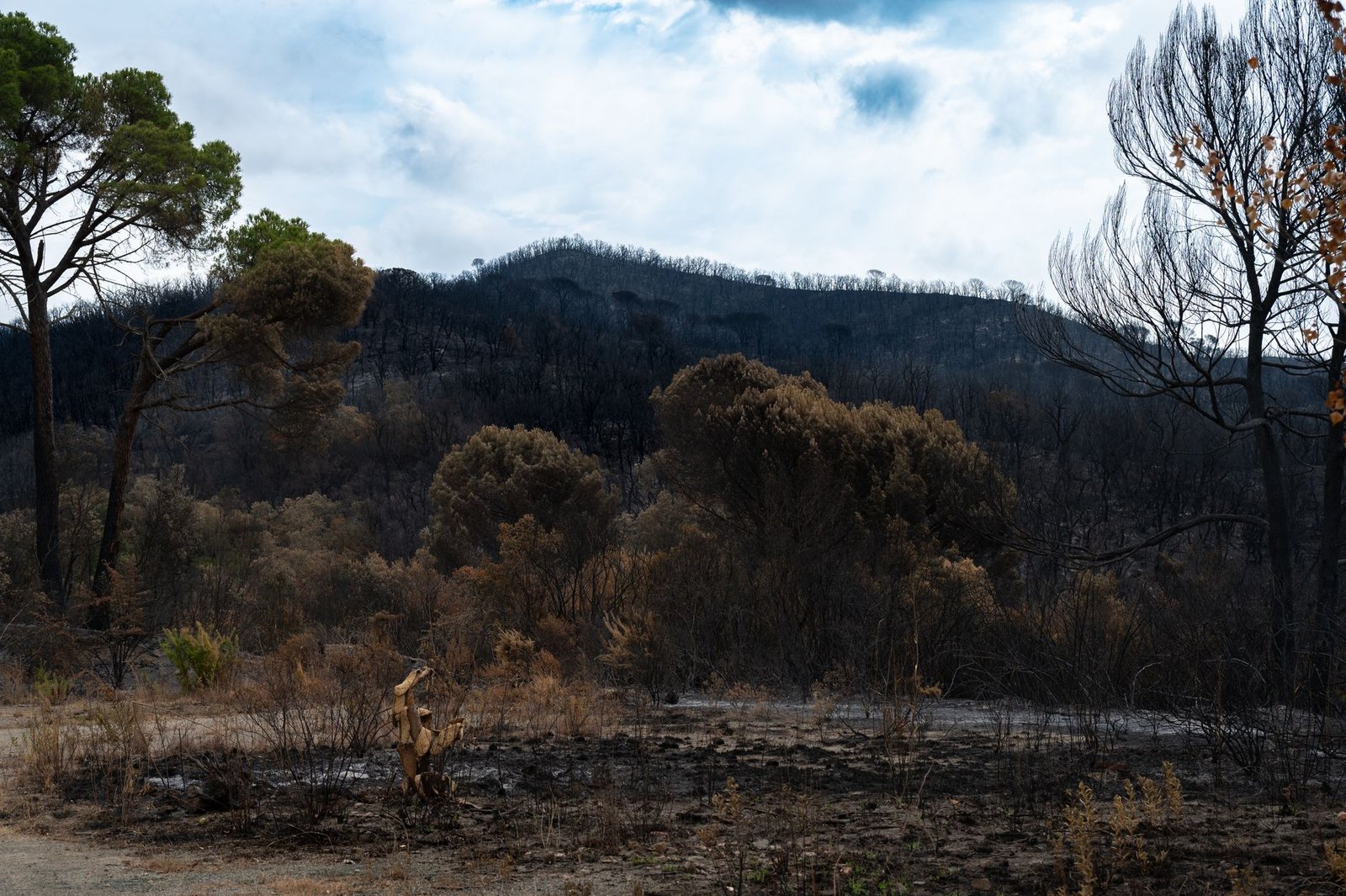
As an overwhelming layer of smoke clouds North America, an ambitious initiative promises a dramatic shift in how we detect and respond to wildfires. The launch of the Google-supported FireSat microsatellites marks a significant leap forward in environmental monitoring technology, ready to revolutionize fire detection and management across the globe.

- The FireSat program aims to identify and monitor wildfires from space.
- Backed by Google’s $15 million investment and other notable funds.
- Its detection accuracy covers small fires that typically evade other satellites.
- FireSat promises to monitor fire-prone areas multiple times daily worldwide.
- This initiative holds transformative potential for AI-based disaster management.
FireSat Takes Flight: A New Era in Wildfire Monitoring
On a transformative day in July 2026, a trio of microsatellites took off aboard a SpaceX Falcon 9 rocket from Vandenberg Space Force Base, ushering in what many foresee as a new era in combating and understanding wildfires. Developed under the watchful eyes of the nonprofit Earth Fire Alliance, this project is designed to reach its “initial operational capability” by the year’s end.
Following an essential three-month testing phase, these satellites will set to work, buzzing around the Earth and providing invaluable data to fire agencies. With the mission to scan every fire-prone region at least twice daily, FireSat signifies a paradigm shift in earth observation technology.
The Unique Edge of FireSat Technology
What sets the FireSat constellation apart in the sphere of satellite technology is its unique ability to detect even the smallest of wildfires. While conventional satellites overlook these minor yet potentially devastating outbreaks, FireSat’s specialized design guarantees a detailed surveillance scope.
Engineered by Muon Space, a forward-thinking satellite manufacturing firm based in California, FireSat’s capability for fine-grained monitoring is akin to upgrading from a grainy, monochrome TV set to the clearest high-definition display. Its precision transforms wildfire detection, ensuring no ember escapes vigilance.
The Power Behind the Program
Driving this cutting-edge technology is an impressive collaboration of stakeholders, with Google anchoring a financial backbone through a $15 million investment. The project’s impact potential also drew the attention of the Bezos Earth Fund, which has pledged $26 million, aiming to bolster deployment and operational efficiency.
Bringing AI to the Forefront of Disaster Management
FireSat’s design is more than just silicon and circuits—it’s a wholly integrated system powered by artificial intelligence. In the context of satellite technology, AI enables these orbiting mini-marvels to process vast swathes of visual data almost instantaneously. By harnessing the power of machine learning, FireSat can differentiate smoke from cloud formations, and identify emerging hot spots before they multiply.
Imagine AI as an astute watchful eye, tirelessly scanning landscapes and raising alerts with pinpoint accuracy, acting as an intelligent sentinel over our environment. This kind of monitoring could be likened to having a network of advanced smoke detectors in a critical facility—but on a planetary scale.
The Road Ahead: AI and the Future of Environmental Safeguarding
As we look to the horizon, technologies like FireSat unfold new narratives in our fight against one of nature’s most formidable challenges. The integration of AI into such systems doesn’t just bolster our current capabilities—it acts as a precursor to vast improvements in proactive disaster response and climate change mitigation worldwide.
With further advancements and wider adoption of AI-backed satellite constellations, we inch closer to a future where environments are not only better preserved but also quickly and effectively shielded from impending threats. Indeed, the FireSat initiative sets the stage for artificial intelligence to emerge as a cornerstone in crafting sustainable strategies for a changing Earth.
