



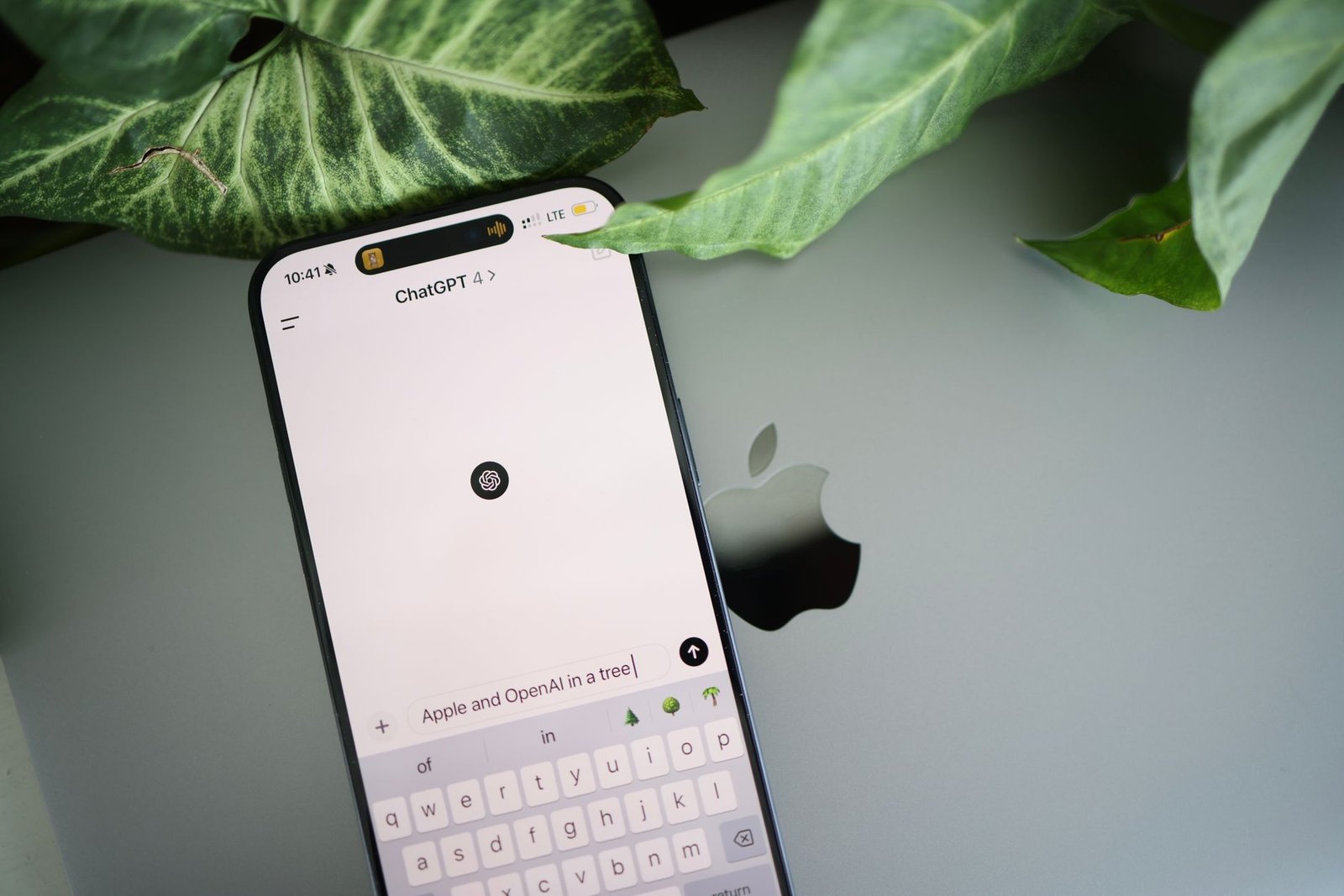
If the thought of talking to your devices seemed futuristic, brace yourself for a reality that’s now unfolding. **OpenAI** and **Apple** have joined forces to integrate **ChatGPT** into Apple’s ecosystem, transforming how we interact with technology.
Key Takeaways
- ChatGPT’s integration aims to enhance Apple products with advanced conversational AI.
- The partnership represents a shift toward more intuitive and intelligent user experiences.
- Expect improved personalization with AI learning from user interactions.
- This collaboration may set a new standard for human-device communication.
Revolutionizing User Interaction
By embedding **ChatGPT**—a **language model** that generates human-like text based on prompts—into **Apple’s devices**, the interaction dynamics are set to undergo a massive shift. Imagine asking your iPad to write an email or your iPhone planning your day intelligently, all as naturally as conversing with a personal assistant.
The Power of Conversational AI
At its core, ChatGPT utilizes deep learning techniques to understand and generate text. This means it doesn’t just execute pre-defined commands; it actually learns from each interaction, making future responses more accurate and personalized. For the end-user, this translates to devices that don’t just respond—they anticipate.
Enhancing Apple’s Ecosystem
Apple’s focus on creating seamless and intuitive experiences makes this partnership particularly exciting. With ChatGPT, Apple’s devices are set to deliver a **contextually aware** interaction model. That means your iPhone could not only recognize what you’re asking but also adapt its responses based on previous conversations and your preferences.
This level of personalization is akin to having a concierge who knows your tastes and needs. For instance, when booking a restaurant, **ChatGPT** might suggest options that align with your culinary preferences, transforming Siri from a basic assistant to a truly engaging companion.
Why This Partnership Matters
The collaboration between Apple and OpenAI is more than just a feature update; it represents a **paradigm shift** in how people use technology. As tech giants integrate AI more deeply into their ecosystems, we move toward a future where digital assistants are less about commands and more about conversations.
Breaking Barriers in Human-Machine Interaction
Historically, interacting with machines involved learning their language. Whether it was command prompts or touchscreen swipes, humans had to adapt. This collaboration flips that concept, encouraging machines to learn our language, customs, and communication styles.
Real-World Applications and Impact
Consider industries like customer service, where quick and accurate responses are vital. With this AI capability, support personnel empowered with ChatGPT on Apple devices can provide superior service, easing workloads with AI handling routine queries. The result? Faster resolution times and happier customers.
What This Means for the Future
The integration of ChatGPT with Apple isn’t the culmination—it’s the beginning. As AI continues to evolve, expect devices to grow even more sophisticated, learning and adapting in ways previously thought impossible. This collaboration not only fosters **innovation** but also raises standards for what users will come to expect from technology.
While this venture exemplifies the advancement of **artificial intelligence** in everyday life, it also raises vital questions about privacy, ethical AI usage, and the future of human-computer interaction. As OpenAI and Apple set the stage for the next act in the tech world, the ripple effects promise new opportunities and challenges for developers, businesses, and users alike.
In this rapidly advancing landscape, the fusion of conversational AI with consumer tech not only enhances our daily lives but also charts a course for the digital future. As such, staying informed and adapting to these transformations will be crucial as we continue to redefine interaction between humans and machines.
