


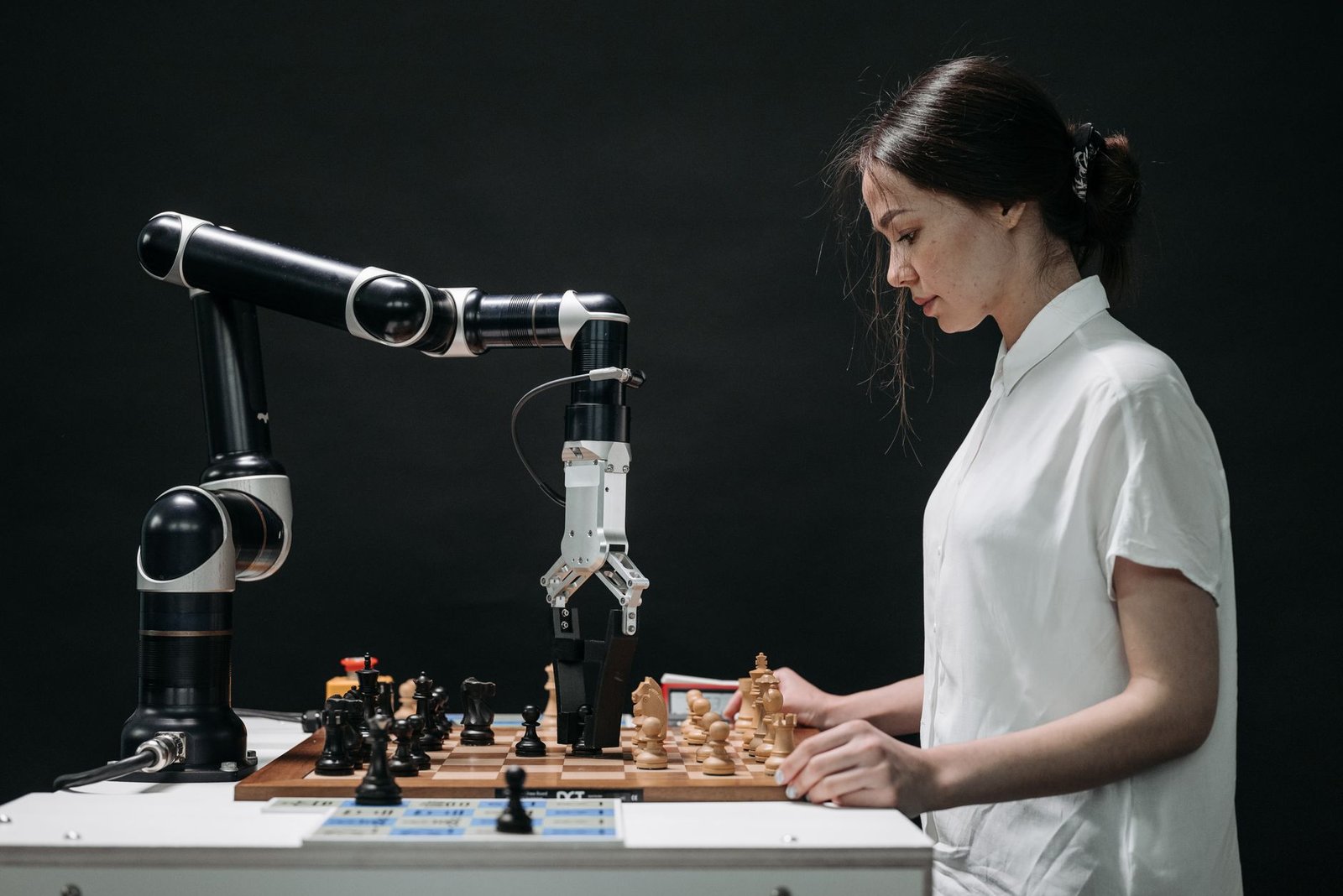
Imagine teaching a machine to play chess, but instead of showing it games played by humans, you let it learn by challenging itself. This is the magic of **self-play**, a revolution in how we train AI models to achieve extraordinary success.
Key Takeaways
- Self-play dramatically boosts AI performance to superhuman levels.
- Self-improving data in self-play leads to continuous learning.
- The future of AI in gaming highlights broader potential applications.
- This approach could redefine how AI learns beyond fixed datasets.
The Evolution of AI Through Self-Play
At the heart of **machine learning**, self-play is a method where the AI competes against versions of itself. This technique has proven that given enough computational power, AI can leap from trailing behind human skills to surpassing even the most elite professionals. One fascinating demonstration of this was seen in **Dota 2**, a complex, real-time strategy game.
From Novice to Champion
Initially, the AI struggled to keep pace with high-ranked human players. However, within a month, it transformed from an amateur to a formidable opponent, even defeating top-tier professionals. Unlike **supervised learning**—where AIs are trained using existing datasets—self-play allows the AI’s dataset to evolve in real-time, as it continuously challenges and learns from itself.
Breaking Down Self-Play
Consider a model that learns by trial and error. In self-play, as the AI continually plays games against itself, it accumulates a wealth of strategies and experiences. Much like how a chess player might refine their skills through practice matches against equally skilled opponents, the AI hones its capabilities. This iterative process promotes rapid improvement and adaptability.
A Real-World Analogy
Think of self-play as learning to ride a bicycle. Initially, you might wobble, but with each attempt, you gain balance and confidence. Similarly, an AI learns and perfects its strategy, not from watching others but by refining its technique through repeated practice.
Implications for AI Development
The success of self-play in games like Dota 2 exemplifies a broader landscape of possibilities for AI learning methodologies. This paradigm shift suggests that AI can be autonomous in its educational journey, relying less on static data and more on dynamic, self-generated insights. Moreover, this continuous learning process could be applied beyond gaming, revolutionizing fields like autonomous vehicles, robotics, and personalized education platforms.
The Road Ahead
As **AI technology** advances, the concept of self-play could become a cornerstone of developing AI systems that are more flexible and efficient. Imagine AI systems that not only learn independently but also teach each other, fostering an ecosystem of ever-evolving intelligence. This promises a future where AI can solve complex problems with unprecedented autonomy, potentially transforming industries and enhancing our everyday lives.
