


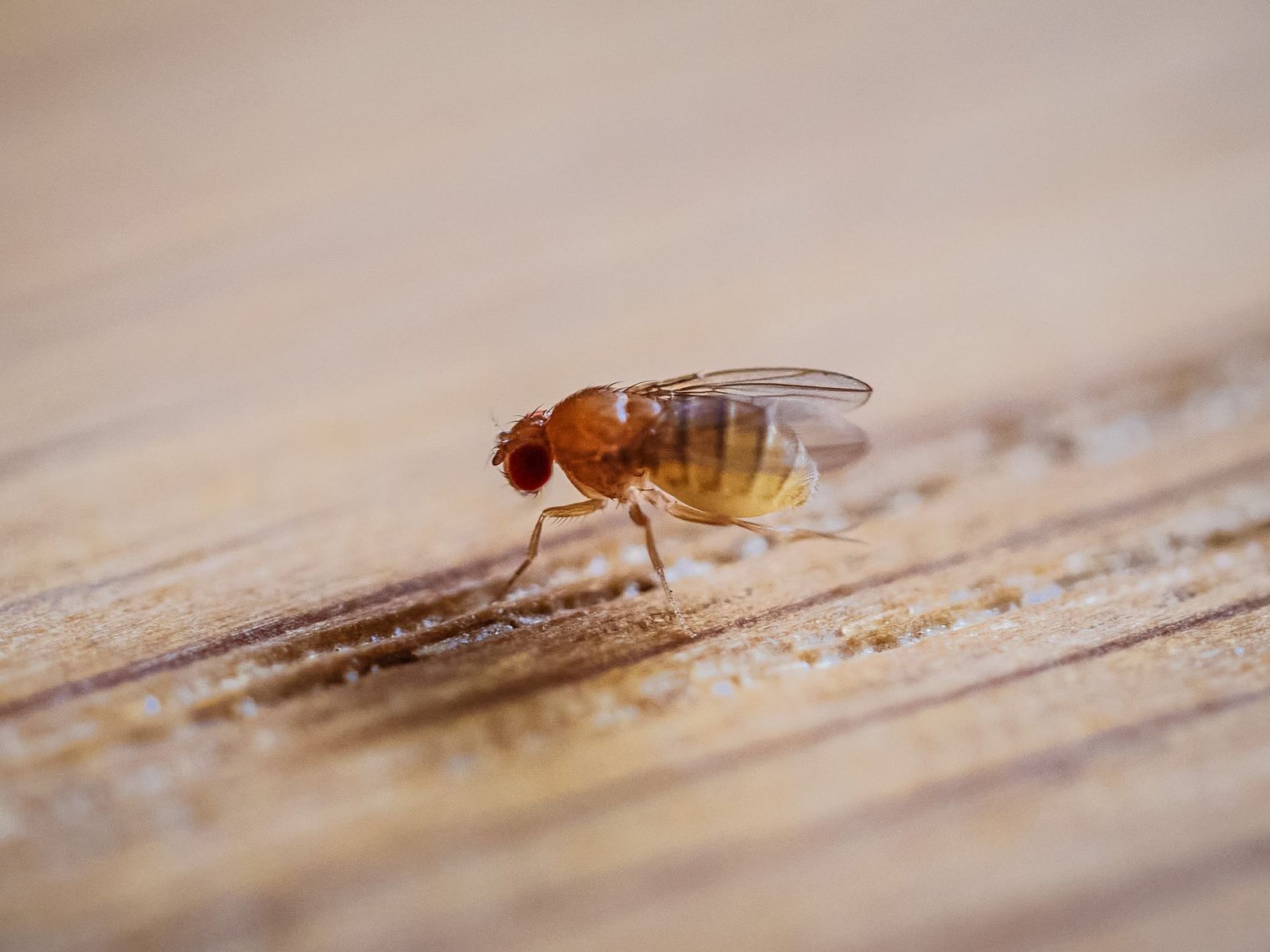
Imagine a tiny fruit fly skillfully navigating through a chaotic mix of swirling odors, weaving and bobbing until it lands perfectly on a piece of rotting fruit. This isn’t just instinct; it’s a highly advanced form of navigation using the **brainpower of a pinhead**. Let’s delve into the remarkable olfactory capabilities of fruit flies and explore the implications of this understanding for AI technologies.
Key Takeaways
- Fruit flies use complex mechanisms for odor navigation beyond simple reflexes.
- The “surge and cast” model oversimplifies insect olfactory navigation.
- Recent research reveals sophisticated tracking similar to advanced AI models.
- This study propels our understanding of small-brain agility in dynamic environments.
- Insights from this research could advance AI and robotics developments.
Redefining Odor Navigation
**Traditional models** assumed that fruit flies followed odors through a basic reflexive mechanism. The “surge and cast” theory suggested that upon detecting an odor, flies would head directly upwind until they lost the scent, then zigzag to regain it. However, this simplistic view failed to explain the fly’s adeptness in long-distance tracking through erratic and inconsistent odor plumes.
Advanced Tracking Mechanisms
In the wild, **odor plumes are unpredictable**, often fragmented by turbulent air currents. This poses a challenge for any creature relying on smell for navigation. Researchers at Rockefeller University, led by neuroscientist Vanessa Ruta, have illuminated more sophisticated mechanisms at play. Their studies reveal that fruit flies adaptively respond to these **sparse chemical signals**, using more than just rigid reflexes.
Ingenious Experiments: The Fly Treadmill
To unravel this complexity, researchers ingeniously crafted a “treadmill” for flies, simulating natural airflows in a controlled setting. This apparatus allowed them to observe flies in action as they responded to artificially created odor plumes. Such innovative experiments showed that **fruit flies possess nuanced processes**, enabling them to track these shifting scents across lengthy spans and in dynamic environments.
Real-World Inspiration
The challenge faced by fruit flies can be likened to finding a specific melody amidst the chatter of a bustling street market. In the same way that a human brain might discern a favorite tune despite background noise, a fruit fly identifies faint odors amid swirling, competing air currents. Understanding these processes can inspire AI developers to create more adaptable and context-aware systems.
The Future of AI and Robotics
Learning from nature’s geniuses, such as the tiny fruit fly, can revolutionize the future of **artificial intelligence and robotics**. Grasping how insects navigate complex odor landscapes may inform the creation of AI systems capable of dealing with uncertain and fluctuating information in real-time. These findings could usher in a new era where **robots and AI** emulate biological entities, leading to more agile and intuitive technologies.
As we continue to explore and decipher the complexities of natural intelligence, the boundary between the biological and technological blurs, offering exciting possibilities for the future. Who knew that a creature as small as the fruit fly could inspire such monumental insights?
