



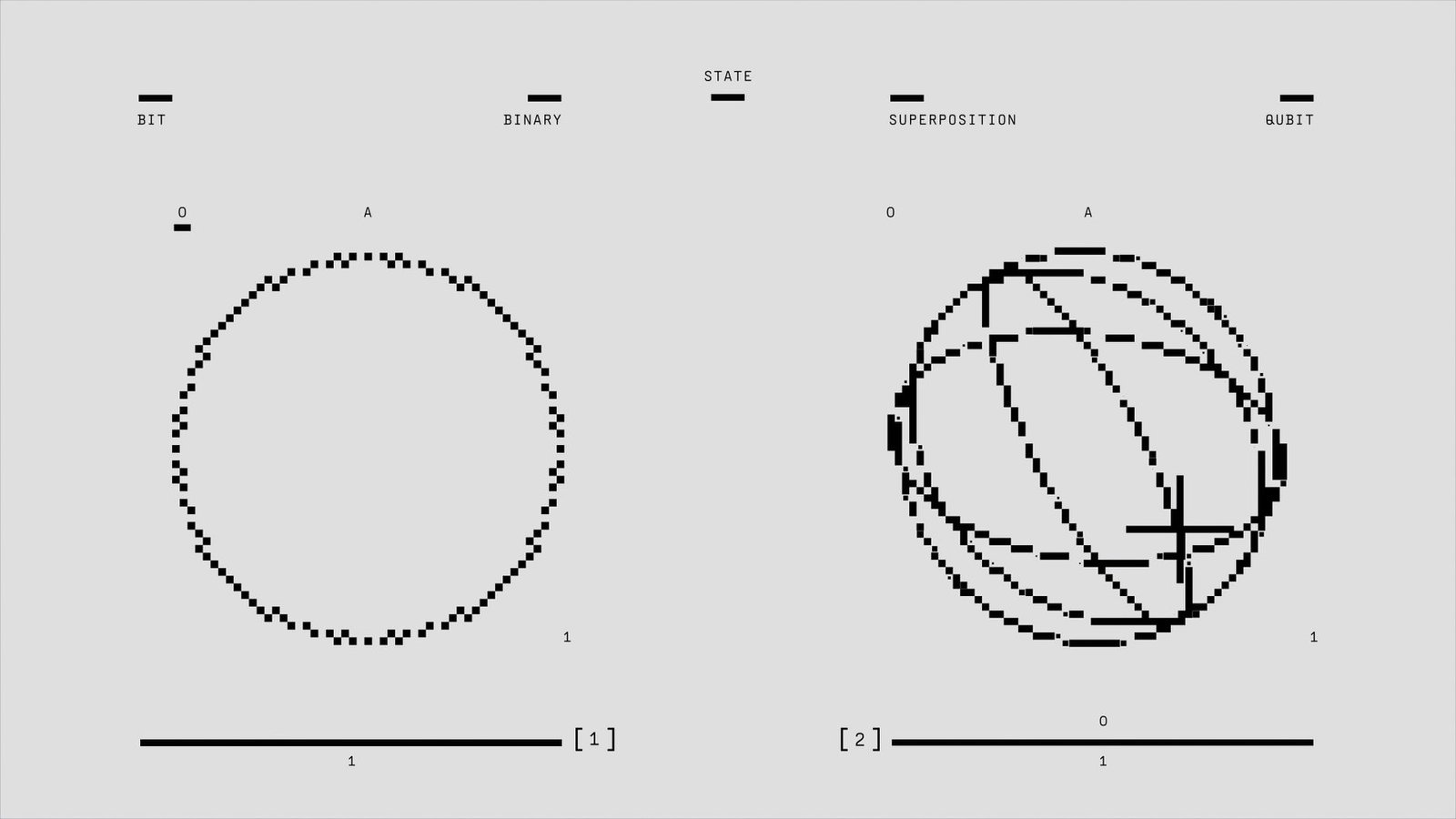
Imagine being on the brink of understanding a language spoken by nature itself—this is the allure and power of mathematics and theoretical computer science. Recently, groundbreaking advancements in these fields have shed new light on age-old problems, revealing secrets buried within the fabric of technology.

- Mathematics and theoretical computer science are addressing long-standing puzzles with new insights.
- Advancements span various domains including geometry, cryptography, and computational complexity.
- Understanding these breakthroughs can significantly enhance AI development and application.
- Real-world implications range from secure communications to more efficient computing processes.
- The future of AI may be deeply influenced by these mathematical revelations.
Revolutionary Insights into Geometry
**Geometry**, one of the earliest branches of mathematics, deals with the properties and relations of points, lines, surfaces, and solids. Recent advancements have provided new ways to solve geometric problems that were previously considered unsolvable. These breakthroughs not only reshape our understanding of space but also have practical applications in fields like computer graphics and robotics.
Imagine trying to navigate a maze with a drone. By applying new geometric principles, pathfinding algorithms can be optimized, ensuring the drone operates far more efficiently and safely.
Cryptography: New Frontiers in Security
**Cryptography** is the science of securing information by transforming it into unreadable formats, accessible only to those who possess a special key. Advances in this field are essential for developing more robust security systems in our increasingly digital world. Cutting-edge cryptographic methods are being designed to withstand even quantum computer attacks, which were until recently thought to be a distant threat.
Consider **end-to-end encryption** used in messaging apps. These new cryptographic practices strengthen these systems, protecting personal and sensitive communication like never before.
Quantum Resilience
The potential threat of quantum computing to current cryptographic practices is significant. Traditional methods rely on the difficulty of factoring large numbers, a task that quantum computers could potentially perform in a fraction of the time. By exploring new cryptographic schemes that remain secure post-quantum, researchers ensure the longevity and safety of digital communication.
Complexity: Understanding Computational Limits
The study of **computational complexity** explores the resources needed to solve tasks with algorithms, such as time and memory. Solving complex problems efficiently is a cornerstone of advancing AI and technology. Recent breakthroughs help in classifying these problems more accurately, enabling researchers to better understand which problems are feasible to solve with current technologies.
P vs. NP—a fundamental question in computer science—considers whether every problem whose solution can be verified quickly can also be solved quickly. Advances in this area offer new perspectives that could reshape algorithm development, providing more efficient solutions to complex problems.
Real-World Impact
Think of **optimization problems**, such as scheduling airline flights or determining the most efficient route for delivery trucks. By understanding and classifying these problems better, companies can save time, reduce costs, and improve services, transforming industries worldwide.
Implications for the Future of AI
As we begin to unravel these mathematical mysteries, the potential applications in AI are vast and transformative. Enhanced algorithms will lead to more intuitive AI systems, capable of performing tasks with unprecedented accuracy and speed. Moreover, groundbreaking cryptographic techniques will secure AI-driven technologies, safeguarding privacy and data integrity in a hyper-connected world.
Lying at the intersection of mathematical theory and practical application, these discoveries push the envelope of what’s possible, heralding a future where AI is not just a tool, but a fundamental component of daily life. As we continue to build upon these advancements, the landscape of technology will keep evolving, highlighted by the profound impact of these mathematical breakthroughs.
