



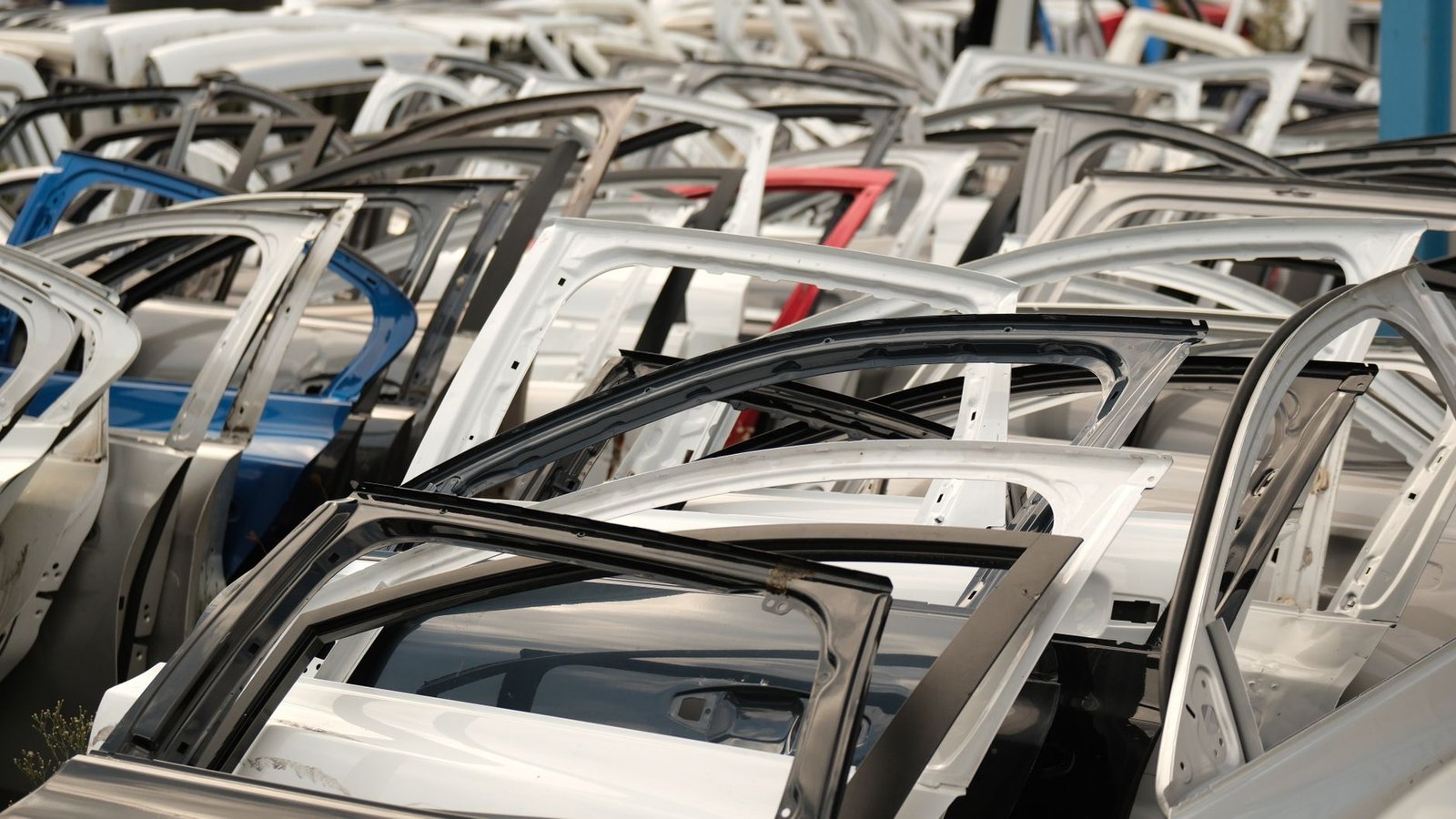
Imagine a world where the booming electric vehicle (EV) industry feeds itself on the remnants of its predecessors, in a cycle that could redefine sustainability. **China** may soon be at the forefront of this eco-conscious revolution, finding value and environmental benefits in recycling used EVs to sustain a new generation of clean transportation.

- China could become a major supplier of recycled materials for the EV industry in coming decades.
- Recycling aims to alleviate dependency on non-renewable resources.
- Changing battery technologies complicate the recycling value chain.
- The study forecasts significant material supply from recycling by 2050.
- Embracing a circular economy is crucial for sustainable technology development.
China’s Journey Towards a Circular Economy in EV Production
**Recycling**—the process of converting waste materials into new materials—has long been touted as an essential strategy for preserving Earth’s limited resources. However, economically, recycling competes with the extraction of virgin materials, which can sometimes be cheaper and more appealing for manufacturers. This is particularly true in fast-evolving industries like that of **electric vehicles**, where **battery technologies** are swiftly advancing. By the time an EV battery reaches the end of its life, innovations may have already shifted to new battery compositions, complicating the recycling value chain.
The Study’s Key Findings: Harnessing Recycled Materials
Research led by **Xin Xiong at Nanjing University** explores this complex landscape in China, aiming to chart how reused materials could eventually surpass the demand for new materials in EV manufacturing. By reconstructing the supply-and-demand model from 2010 to 2050, the study zeroes in on essential elements for battery production—such as **lithium, cobalt, nickel**, and **manganese**—as well as materials significant to electric motors like **copper** and **neodymium**.
According to the study, as EV numbers increase and existing models are scrapped, the proportion of materials retrieved from recycled sources will notably rise, positioning recycling as a mainstay of China’s EV supply chain.
The Challenge of Changing Technologies
Recycling faces a unique obstacle because **battery chemistry**—the specific composition of the materials inside a battery—can change over time. As the industry pushes for more efficient, cheaper, and environmentally friendly batteries, the recycled materials from older technologies may not perfectly align with the needs of the latest advancements. This makes recycling not just a mathematical problem but also a logistical puzzle.
To make this concept tangible, think of evolving diets: if you stockpile ingredients for baking bread but suddenly switch to making pasta, the utility of your bread ingredients diminishes. Similarly, when manufacturers shift battery chemistries, the value of existing recyclable materials can fluctuate.
Pioneering Sustainable Manufacturing Practices
Despite these hurdles, China’s progress illustrates the potential reality of a **circular economy**—a system where waste is minimized by circulating materials back into production instead of discarding them. Such a paradigm shift is vital for a sustainable technological landscape, one that reduces ecological footprints and decreases reliance on finite resources.
Future Implications for AI and Beyond
As we gaze into the future, China’s strategic adoption of recycling could serve as a model for other technology-heavy nations. This initiative does more than sustain the EV industry; it introduces a mindset of utilizing AI to optimize resource recycling processes, thus setting a precedent for environmentally responsible **technological innovation**. Leveraging AI can vastly enhance recycling efficiency, predicting wear and tear and facilitating smarter recycling processes.
The momentum behind recycling not only addresses current manufacturing needs but also opens pathways for **AI-driven solutions** to tackle global environmental challenges, underscoring the potential for AI to foster a greener, more sustainable future.
