



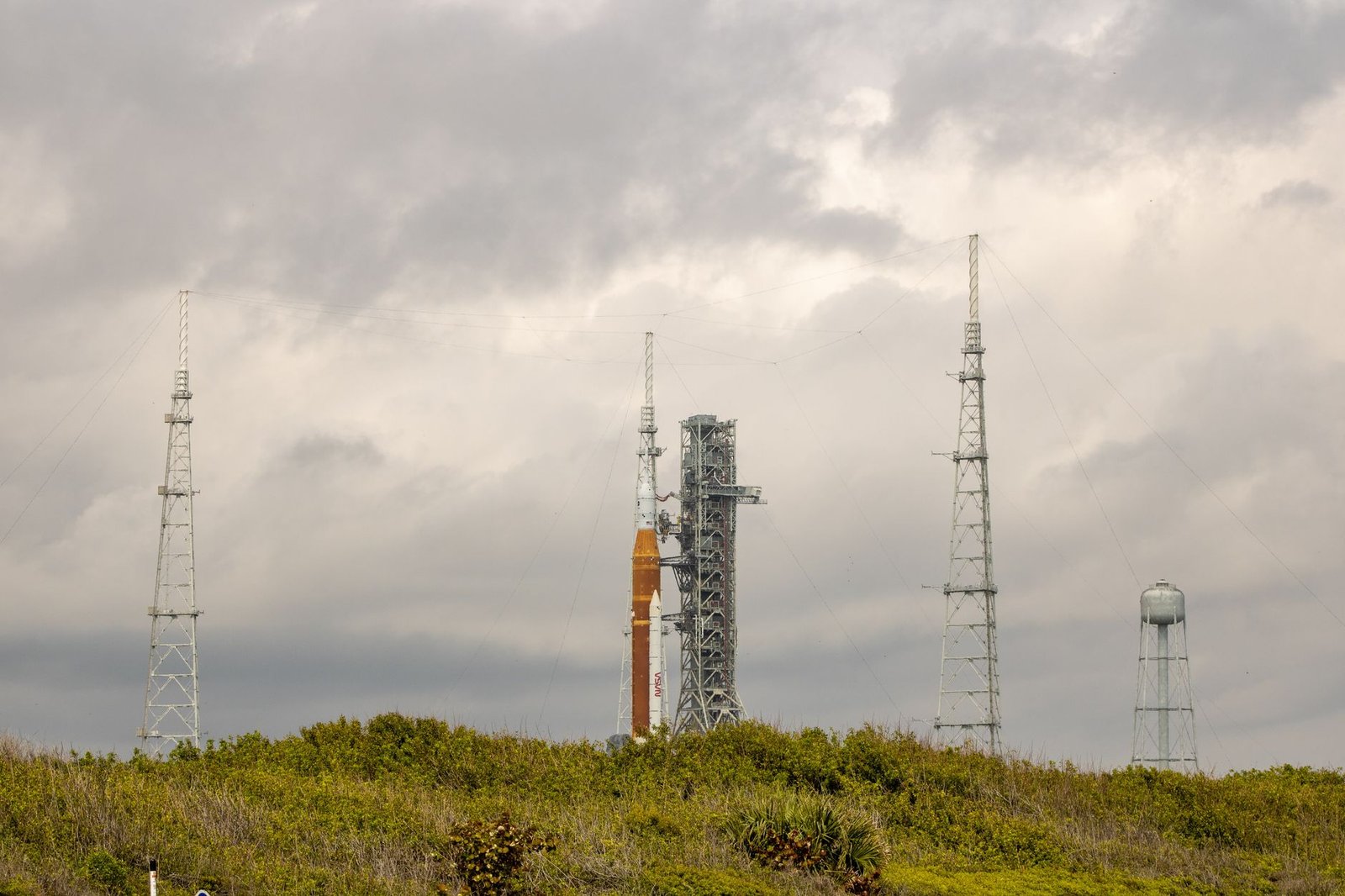
The world watched with bated breath as NASA’s Artemis II mission unfolded, with a single question echoing across scientific circles: could Orion’s much-debated heat shield withstand the intense reentry conditions? This technological marvel, having previously shown some vulnerabilities, was put to a critical test on its journey back to Earth. Let’s delve into how it managed to meet these expectations and what it signifies for space exploration’s future.
Key Takeaways
- The heat shield was crucial to the safety of the Artemis II mission.
- Previous tests had shown unexpected material loss, causing concern.
- NASA opted for an altered reentry path to mitigate these risks.
- The mission successfully completed with safe crew return.
- This success heralds promising advancements in AI-assisted space exploration.
Understanding the Heat Shield’s Role
The heat shield, often described as a spacecraft’s thermal armor, plays the critical role of **protecting astronauts** from the searing temperatures experienced during reentry. As the spacecraft plummets back to Earth, it encounters a rapid increase in atmospheric pressure and velocity that generate extreme heat. The heat shield absorbs and dissipates this heat, ensuring the crew inside remains unscathed.
Challenges from Previous Missions
During a test flight in late 2022, the heat shield on Orion’s base exhibited unanticipated material loss, shedding significant chunks during reentry. In technical terms, this shedding involved its **ablative material**, a substance designed to char and wear away to carry heat away from the spacecraft. But losing larger segments than planned sparked concern about material integrity.
NASA’s Innovative Solution
Faced with the dilemma, NASA chose not to overhaul the heat shield entirely. Instead, the agency adjusted the spacecraft’s **reentry trajectory**, altering its angle and speed to minimize stress on the shield. This strategic move, akin to taking a gentler slope when riding a skateboard down a steep hill, allowed for a less intense interaction with the atmosphere, thereby enhancing the shield’s effectiveness.
The Successful Outcome
Ultimately, the culmination of this fine-tuning was a resounding success. As the Artemis II crew, under the command of Reid Wiseman, emerged safely from the Pacific Ocean, it marked a significant milestone in NASA’s journey around the Moon. In post-mission briefings, the officials confirmed the **heat shield’s integrity**, noting it stood up remarkably well to its ordeal.
Drawing Parallels with Everyday Experiences
To put it into perspective, think of the heat shield as akin to a **courageous firefighter’s helmet**, designed to withstand the blaze and protect the wearer. In this analogy, the ablative material is comparable to the fire-resistant coating that chars superficially but steadfastly defends what lies beneath.
The Impact on AI in Space Exploration
While the Artemis II mission primarily demonstrated advancements in aerospace engineering, it also offers exciting prospects for AI technology in future missions. This success story is expected to accelerate the integration of **AI-driven solutions in spacecraft design**, such as predictive modeling for trajectory adjustments and real-time adaptive control systems.
Looking ahead, the advancements marked by Orion’s heat shield pave the way for AI to play an increasingly critical role in enhancing not only safety but also the efficiency of space missions. As artificial intelligence continues to evolve, its applications in areas from **data analysis to autonomous decision-making** could redefine what’s possible in the realm of space exploration.
